Česky
Česky


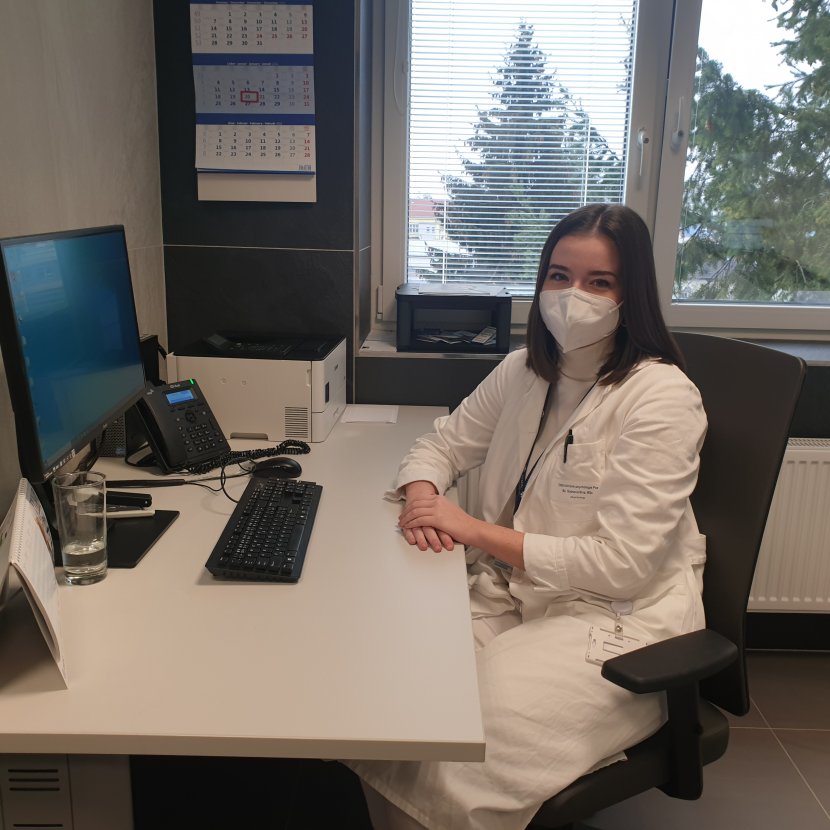
What led you to study psychology? Since when did you become interested in how the human soul works?
I've always been more humanities oriented, and I'm lucky enough to have known from a relatively young age what I wanted to do as an adult. I remember reading an article with a psychologist around the age of 14 and becoming more interested in what psychology was. I started going to the volunteer center, reading literature that interested me in the field, and it solidified that I wanted to study psychology.
What is your specialty and do you focus only on adult patients?
Yes, I work mainly with adult patients. I work as a psychologist at the Multiscan Cancer Centre, the Neurology Department and the ENT Department at Pardubice Hospital. Patients can also find me in the outpatient clinic at our Department of Clinical Psychology. I work with patients both therapeutically through therapy or crisis interventions, and in the form of examinations. This can be complex, focusing on cognitive functions, personality, or directly neuropsychological, focusing on the examination of cognition and determination of the patient's difficulties.
Your primary focus is on patients at Pardubice Hospital. What are the reasons that they decide to seek a clinical psychologist?
The reasons are various. Some, as I mentioned, come with difficulties in cognitive functions, whether in memory, attention or speech, and an examination is necessary to help us understand these difficulties and try to uncover their origin. Some patients come acutely, due to an adverse situation they have experienced. Another reason is the chronic difficulties they are experiencing and they are not able to get them under control or cope with them. Anyone who has experienced an unpleasant situation that they cannot get under control should seek help. The patient may be distressed by his or her situation, experiencing discomfort that he or she cannot cope with on his or her own and that interferes greatly with his or her daily life. Help should not only be sought on the basis of what is bothering him and how serious he considers it to be, but also how intensely it makes his life difficult. A professional can always bring a new perspective to the situation and be a support for the patient.
Since October, you have also been coming regularly to our Cancer Centre. When and where can our patients see you?
At Multiscan, patients can visit me every Monday from 8 a.m. on the 3rd floor of Building 24. They can make an appointment for a consultation through the doctor, through the nurse Lucie Čapková or by contacting me directly. If Monday appointments are not convenient for patients, it is always possible to make an individual appointment.
Is there anything specific about psychological help for oncologists?
Psychological help is very individual, just like help for every patient who comes to us. Of course, it is specific in what patients come with in the course of treatment and also in the demands on the psychologist. I think it is important that the psychologist working in the oncology department is also trained in oncology. Knowledge will never catch up with a doctor, but in my opinion it is important to be familiar with the issues and their foundations. To know the possible treatment of patients, how it is carried out, and the possible side effects that very often worry patients. All of this can be the subject of questions which, although as a doctor I cannot answer from a medical point of view, I can understand what the patient's concerns are. Based on this, I can support patients, address the risks they are worried about, talk about concerns and reduce any anxiety about treatment.
What problem do cancer patients most often seek you out with?
It's a really diverse range of things. A cancer diagnosis is accompanied by a storm of emotions that patients need to share. They can be overwhelmed by them, and this can lead to their psychological destabilization. Fear is another big theme that comes up in therapies. Some people like to visit my office before their first chemotherapy or radiotherapy because they are anxious. Sharing has a lot of added value in this case. For some patients, treatment has entered other life stages that they are going through and they simply need to vent and talk through all these challenging situations. But space is given in therapy for any topics that the patient wants to share.
How does therapy work and does it need to be repeated?
People often have an idea of what therapy looks like, especially from TV shows. Therapy may look different for each psychologist, as there are different types of psychotherapeutic orientations. These may use different therapeutic techniques, be directive or non-directive. What every therapist and every therapy should have in common is the authenticity of the therapist, empathy and support of the patient. Psychotherapy is provided in health care settings by a psychologist who has a single-subject degree in psychology and is in certification training. Therapy is usually in the form of an interview. At the beginning, the patient is introduced to how the sessions are conducted, how I work, what to expect from them, and how much time is available. If it is an acute crisis that has arisen from an unexpected event and the patient has managed to stabilise and secure himself and has support around him to help him manage the situation, there may be one or two sessions. If it is a more complex problem that has been troubling the patient for a long time, then it is a good idea to meet regularly for sessions. Again, however, this is purely individual and the number of sessions is adapted to the needs of the patient and his/her peripatetic situation.
Psychohygiene is being talked about more than ever before. Is there a preventive measure that can help to keep a person sane?
Psychohygiene is nowadays seen as an important part of the regeneration of our mental health. We are exposed to challenging mental situations, stress and rush on a daily basis, which has a negative impact on our overall health. It is quite common that we encounter moments in life when it is difficult to maintain our well-being and good mood. However, the least we can do for ourselves is to take care of our physical health. Playing sports, engaging in hobbies that we enjoy, spending time with friends and family, eating a healthy diet and not dragging work home. Especially in this time of limited contact, the importance of social contacts and connections becomes apparent. If we are already worried about something, it is always better to confide in someone we trust, complain and not be alone.
There is always talk that there is a shortage of psychiatrists and psychologists in the Czech Republic. The reform of psychiatric care and the emerging Mental Health Centres can help. How will they benefit the patient to get help in time?
The reform of psychiatric care aims to modernise and make mental health care more accessible to everyone who needs it. Care in our country is underfunded and capacity is inadequate. The number of people who have needed or need psychiatric or psychological care has been increasing for a long time. Mental health centres are not being set up primarily for ordinary patients, but for those who have a serious diagnosis. This may be, for example, severe personality disorder or severe depression. It is very good that efforts are being made to make mental health care more accessible to the public. This care is not only just as important as our physical health, but it should also be just as accessible. I would again liken the importance of early care to an injury. If we don't treat a wound in a timely manner, we risk complications and a lengthy healing process. It is the same with our souls. Our personality structure, the length of time we have been under stress, and our ability to cope with stressful and challenging situations all affect how we handle challenging situations. It is always better, if we need it, to get into the care of a professional early on.
The profession of psychology is very demanding. What is your valve and are you able to filter out patients' problems?
I can filter the problems away from me, but it doesn't mean that I don't think of the patient, think of how they are doing, or that they cease to exist for me when the door closes behind them. I regularly attend supervision sessions, which serve to address problematic situations in my work with patients, develop professional skills, add perspective and help maintain a healthy distance. Last but not least, the aforementioned psychohygiene is also important. I have interests outside of my field that I enjoy pursuing in my spare time, spending time with family and friends. The balance of my personal and professional life, plus the professional supervision of my work, ensures that I do not burn out as a person in the helping profession.
If patients need psychological help, they can contact me at 466 019 542. Consultations take place every Monday in the dispensary in the Multiscan building (No. 24) on the premises of Pardubice Hospital.