Česky
Česky


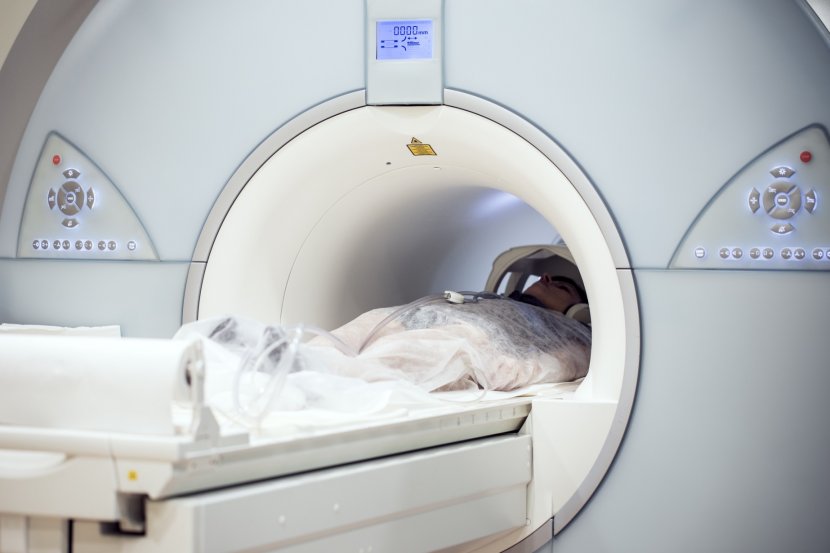
At your workplace you offer MRI, CT scan, X-ray and ultrasound. Could you indicate which type of examinations you perform most often and how many of these four examinations you perform on average per year?
At our department, we most often perform magnetic resonance imaging examinations. We have 2 machines for this, on which we examine about 14,000 patients a year.
Multiscan has contracts with all insurance companies - so if a patient pays for health insurance and has a referral from a doctor, the examination costs nothing. Do you perform procedures without a doctor's recommendation and how much does an MRI cost, for example?
Of course, self-payers can also contact us if they are interested. However, these patients should bear in mind that not every examination can be performed without a medical recommendation (e.g. X-ray and CT scan) and that a diagnostic examination is usually only a piece of the puzzle and may not be of sufficient benefit without further assessment by a specialist (e.g. a neurologist).
The cost of the examination always depends on the type of examination and then on the so-called protocol, which basically means that it depends on what is being examined, what part of the body is being examined and whether a basic examination will be sufficient or whether an extended examination will be necessary. As an example, I will give you an MRI of the brain, where the cost of the examination for a self-payer ranges from CZK 8 000 to CZK 12 000.
Most of your patients are from the Pardubice Region, but you also have a patient from Most, for example. What is the reason that people come to you even from such a great distance, and is it usual?
Yes, it is quite common that patients from places far away from Pardubice also come to our clinic. This is mainly because our facility meets criteria that are important to patients, such as appointment times, quality of examinations and the friendliness of the staff. This is where our workplace can be considered superior without exaggeration. Short appointment times, the ability to choose the time of the examination according to your needs, and experienced and helpful staff, all of these are very important to us.
Of course, promotion also plays an indispensable role, thanks to which the awareness of our workplace among the public has recently increased significantly. However, we must not forget that we owe many of our patients to their relatives and friends who have been satisfied with us and have recommended us to others.
You are part of the Comprehensive Cancer Centre of the Pardubice Region. What proportion of your patients are oncology patients?
The number of oncology patients varies depending on the type of examination, the area examined and the frequency of check-ups. Most oncology patients are examined at our CT department, which is dedicated to the examination of oncology patients. This accounts for approximately 90% of all examinations performed. These are mainly planning CT scans and follow-up CT scans of the chest, abdomen and pelvis. While the proportion of cancer patients can be described as significant for MRI and ultrasound, we also perform a range of other examinations that are not primarily aimed at cancer patients, so it cannot be said that cancer patients predominate on these devices. However, we still try to prioritise them.
In the case of magnetic resonance imaging, this is approximately 7-8% of all patients. For ultrasound, it is about 20%, and for X-ray, the number of cancer patients is negligible.
How do you view the general shortage of radiology assistants and assistants?
The shortage of staff is a problem for the healthcare system as a whole. There is a shortage of staff in virtually all departments. In the case of radiology assistants, this is partly due to the fact that the job has never been considered prestigious. We are neither doctors nor nurses. We are the ones in the back who, while important, are not often talked about and most patients often don't even know where to put us.
Those interested in the profession are also put off by the risk of working in ionising radiation and the need for a basic understanding of physics. Until recently, low pay in most workplaces was also a reason. The education system itself and its constant changes are a separate chapter.
In this respect, our department has the advantage that we have continuously supplemented our team with graduates of radiology assistant from the University of Pardubice, with whom we cooperate in the education of its students.
In March, a new ultrasound machine was purchased for your department. Are there any other improvements planned for the foreseeable future?
At the moment we are planning mainly to improve the facilities for patients. One of them will be free WiFi for patients or the purchase of a television for the patient waiting room. We have lots of other ideas in mind that we are seriously considering, but for now it is in the planning and negotiation phase.