Česky
Česky


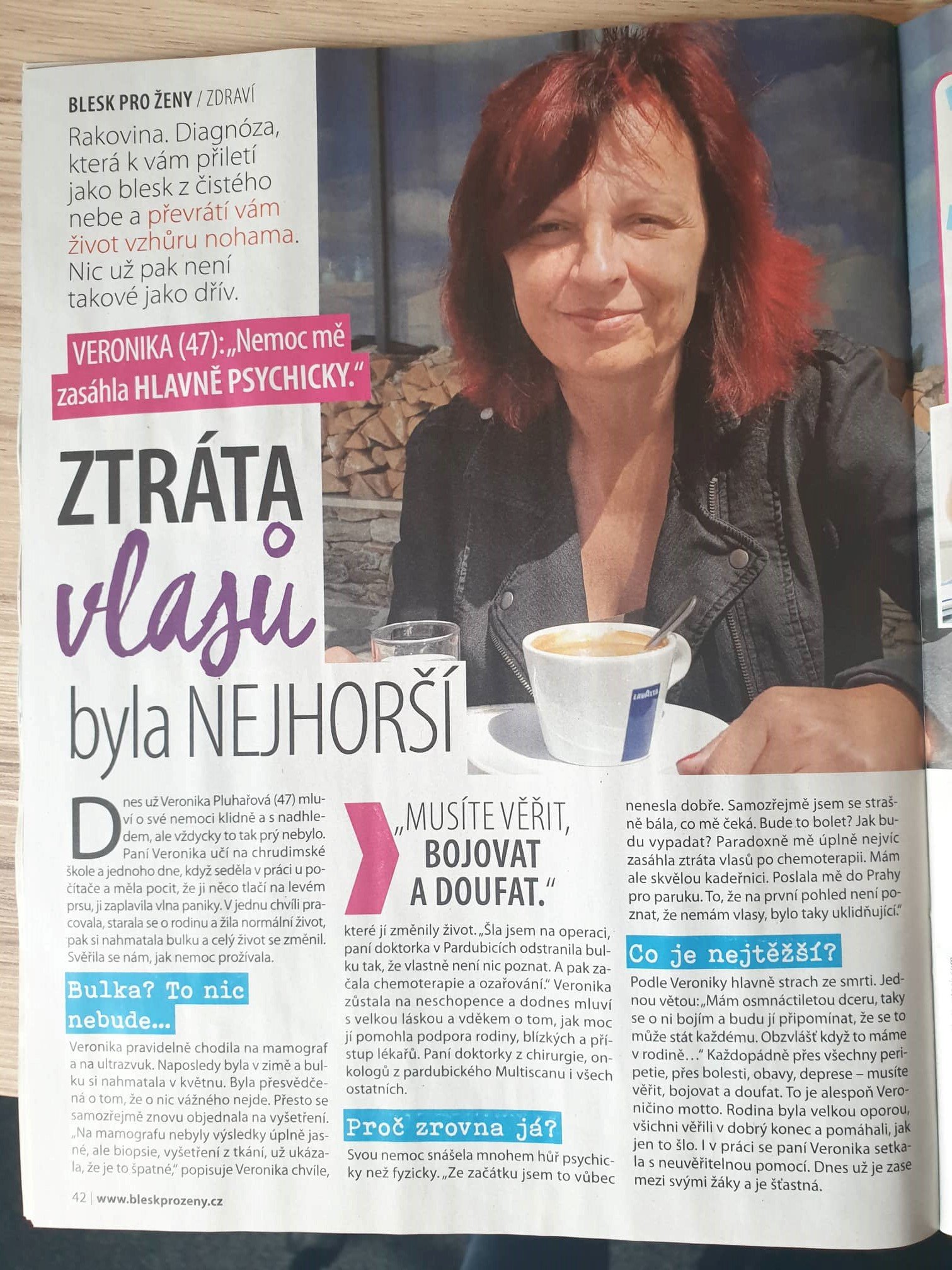
Cancer. A diagnosis that comes to you like a bolt from the blue and turns your life upside down. Nothing is the same afterwards.
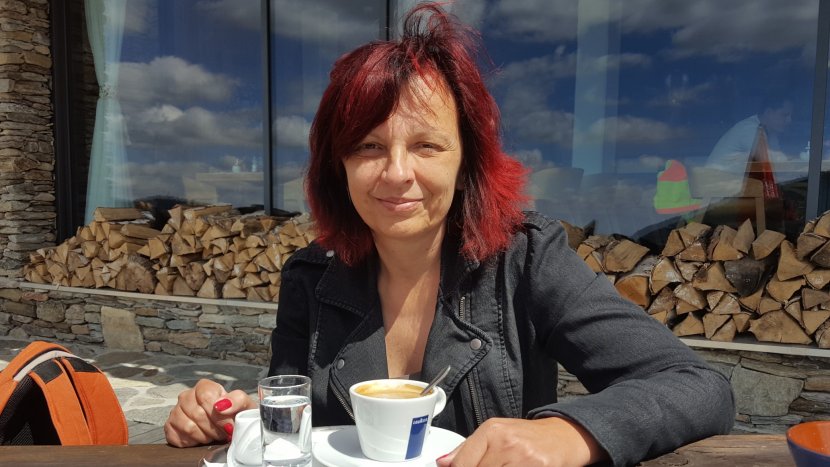
Today, Veronika Pluhařová (47) speaks about her illness calmly and with detachment, but she says it wasn't always like that. Veronika teaches at a school in Chrudim and one day, when she was sitting at her computer at work and felt something pressing on her left breast, a wave of panic washed over her. One minute she was working, looking after her family and living a normal life, the next she felt a lump and her whole life changed. She shared with us how she experienced the disease.
A lump? It's nothing...
Veronica had regular mammograms and ultrasounds. Her last mammogram was in the winter, and she felt the lump in May. She was convinced it was nothing serious. But of course, she made another appointment. "The results on the mammogram weren't completely clear, but the biopsy, the tissue scan, already showed that it was bad," Veronika says of the life-changing moment. "I went for surgery, the doctor in Pardubice removed the lump so that you can't really tell. And then chemotherapy and radiation started." Veronika remained on sick leave and still speaks with great love and gratitude about how much the support of her family, loved ones and the attitude of the doctors helped her. The doctors from the surgery, the oncologists from Multiscan in Pardubice and everyone else.
Why me?
Her illness was much harder to bear mentally than physically. "At the beginning I didn't take it well at all. Of course, I was terribly afraid of what was in store for me. Is it going to hurt? How would I look? Ironically, the loss of my hair after chemotherapy hit me the hardest. But I have a great hairdresser. She sent me to Prague to get a wig. The fact that you can't tell at first glance that I don't have hair was also reassuring."
What's the hardest thing?
Veronika says it's mainly the fear of death. In a sentence. "I have an 18-year-old daughter, I'm scared for her too and I'll remind her that it can happen to anyone. Especially when it runs in the family..." Anyway, through all the vicissitudes, through the pain, the fears, the depression - you have to believe, fight and hope. At least that is Veronica's motto. The family was a great support, everyone believed in a good ending and helped as much as they could. Even at work, Veronica found incredible help. Today she is back among her students and happy.
3 questions for the expert
MUDr.Vít Ulrych, Oncology and Radiology Centre Multiscan Pardubice
1. How do patients most often receive the information that they have a cancer?
Shock is the first reaction to bad news when a diagnosis is announced. It is a very tense state full of negative emotions. It lasts only a few hours, then fades, but the black thoughts persist. That is why psychological support from family and friends is very important.
2. Can you tell us how Veronika's treatment went and how she endured it?
Veronika was unlucky right at the beginning when she experienced an allergic reaction with anaphylactic shock during the operation, which was fortunately well managed by colleagues from the surgical clinic and anaesthesiology. She tolerated the chemotherapy quite well, albeit with nausea, slight weight loss, slight joint pain and unfortunately also hair loss, which she had counted on in advance and arranged for a wig that matched her expectations. She subsequently underwent radiation treatment. Mrs. Veronika managed them without any complications, finished in the spring and after the holidays she returned to her pupils.
3. Do you often encounter that a seriously ill patient returns to life in this way, quite quickly?
Yes. The situation has changed since I joined oncology more than twenty years ago. Previously, patients even from the surrounding area received treatment during hospitalisation, and now, on the contrary, even from quite a distance, patients commute for treatment on an outpatient basis and often go to work during treatment.
Facts about breast carcinoma
*About 7 000 women are newly diagnosed with the disease each year in the Czech Republic and about 1 900 women die from it.
* It affects women of working age to a large extent.
*The typical age of a Czech breast cancer patient is between 60-69 years, but almost 36% of all patients are younger than 60.
*The population includes patients with germline mutations of BRCA 1 and 2 genes, which are associated with a high risk of breast cancer.
Source.