Česky
Česky


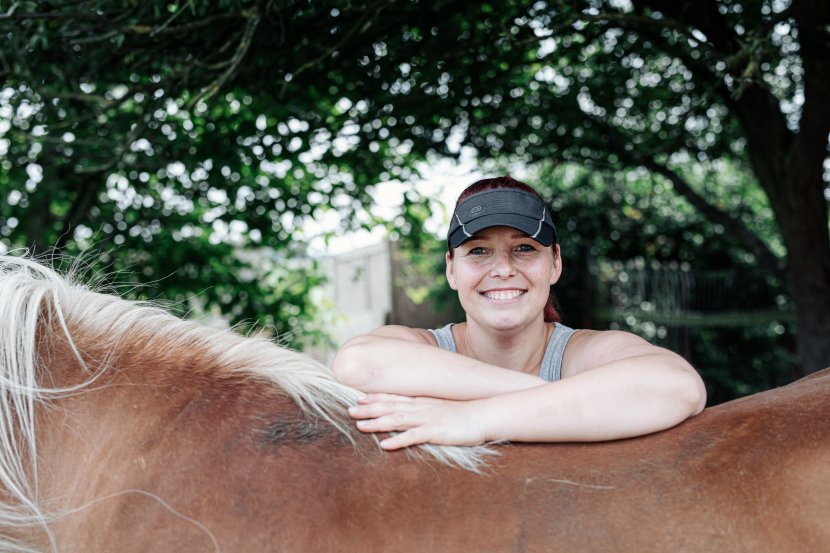
How did you get into horses?
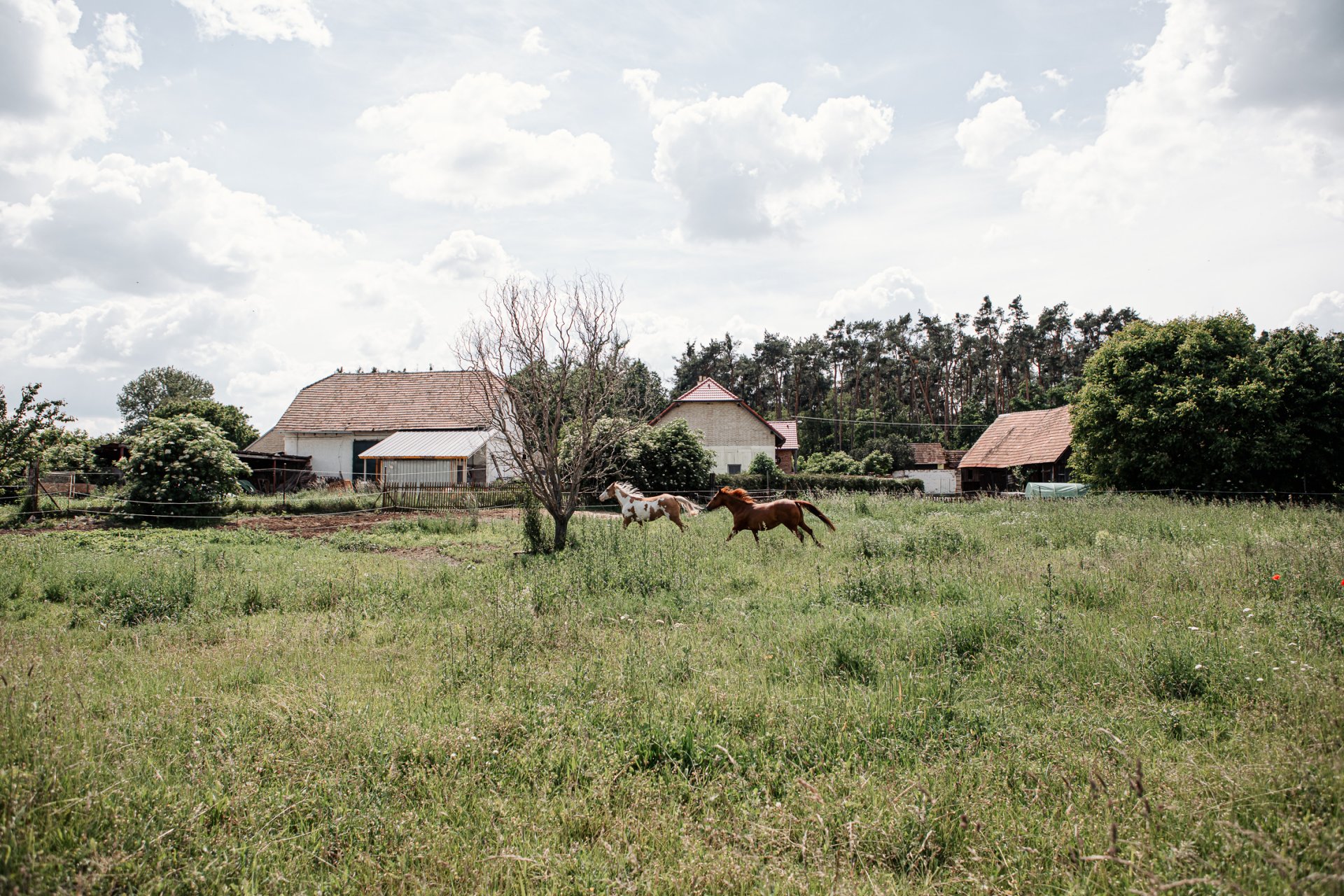
My parents bought a farm near Pardubice 25 years ago. So it was more about the perimeter walls that gradually came together. A barn and a stable were built, the house was renovated, where there was no electricity before. I was in the first grade then. My parents got me my first horse when I was 10 years old. I had epilepsy as a child and riding helped me, which was confirmed to my parents by a neurologist at Thomayer Hospital. But the weekly commute to see the horse was quite difficult and expensive, so they decided to buy me a horse of my own.
You graduated from the University of Pardubice as a radiology assistant. At the same time, you have a high school degree in agriculture with a focus on horse breeding. They're two completely different professions.
I knew from primary school that I wanted to do therapy with disabled people. So I studied physiotherapy in Ústí nad Labem. But my mother got sick and I had to move back closer to help her, and a radiology assistant course was just opening in Pardubice. In the end I am glad because unlike a physiotherapist I don't come home physically exhausted and I have enough energy to take care of the horses. The grass has to be cut, the horses need to be fed and they need to be trained. I do it alone, and if I'm on duty, a friend helps me.
How many horses do you have on the ranch?
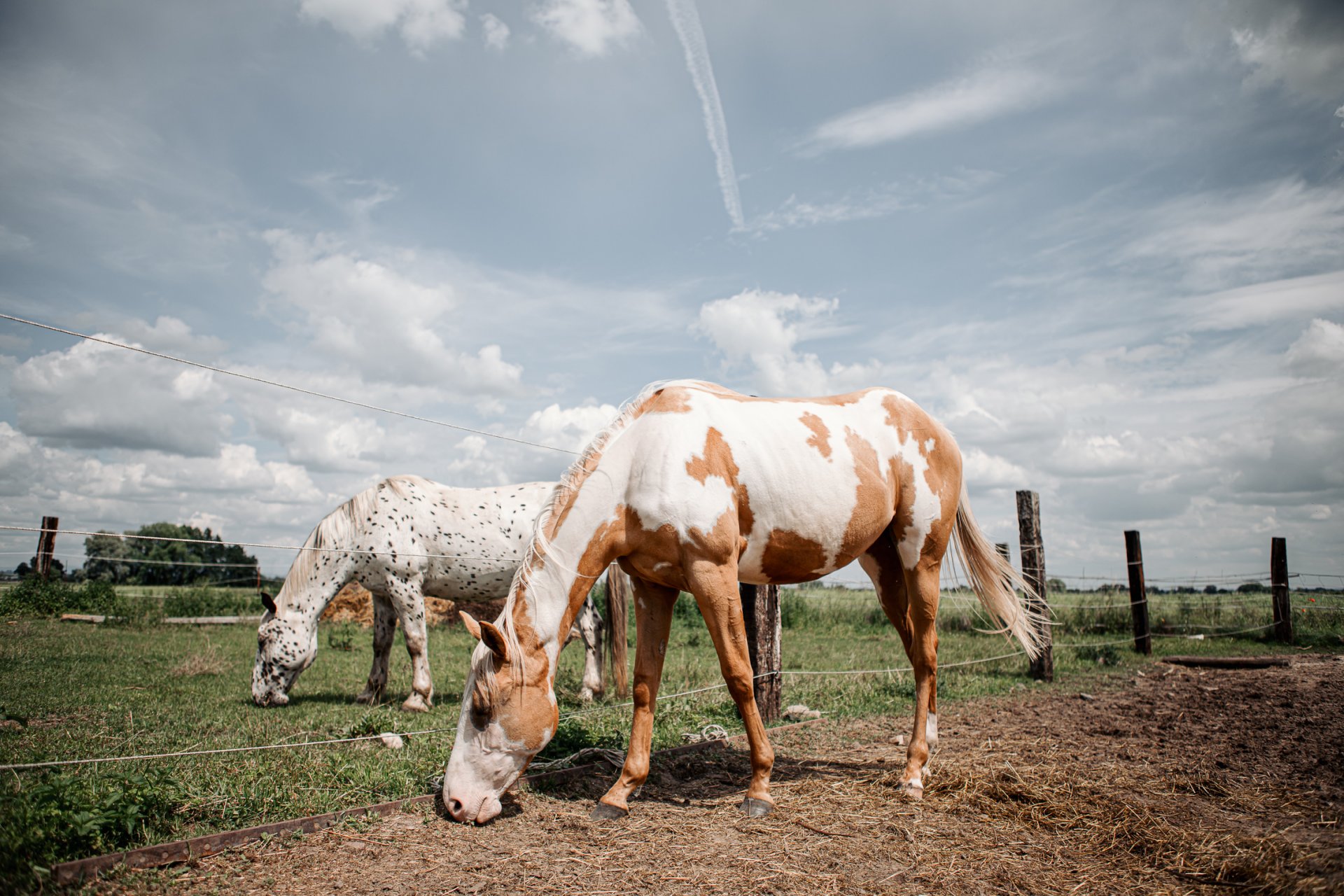
Currently three, I got my last one last fall. Two of the horses are boarded with us, which partially pays for the operation of the others. The oldest horse is Nagano, who is 20 years old. I bought him as a 14 year old. He was abused, so at first he had a panic fear of people and only after a year of hard work did he gradually get used to people again. Plus, no one had ever ridden him before. He is a kind of haflinger horse, originally from the Tyrolean Alps, who had to manage everything - driving a cart, working in the fields, riding with children. Unfortunately, officially, children can't race him because he's a stallion.
Why?
By not being gelded (he has 14 officially registered foals), he is not allowed to be ridden by youngsters under the age of 18 according to Western Riding Club rules. He is, however, terribly good and can be ridden by very young children indeed. Nagano has also done races with my mom, who is in a wheelchair. That was also the reason we got a second horse. For a person with a disability, the horse must be a gelding or a mare according to the criteria of the Czech Hipporehabilitation Society. Nagano only met the condition that the animal must be older than five years. Our third horse is still a foal and not even three years old. The sire of this mare has a very gentle nature, which is an excellent quality for racing with children. She was "created" to our order.
Artificial insemination?
In more expensive stallions, insemination is done in this "non-contact" way because the mare cannot risk kicking and injuring the stallion. This could mean a big financial loss - a batch of good quality horse semen costs around 30,000 crowns. In recent years, for this reason, the more expensive breeds have even used surrogate mothers to carry and deliver the foal. In our case, it took a year for the mare to foal. I even used a Czech Railways courier to deliver the horse's semen to the station exactly according to ovulation. A colleague at work had to change her shift for me so that I could pick up the delivery. When she heard what I was going for and why, she couldn't believe her ears.
And was it worth it?
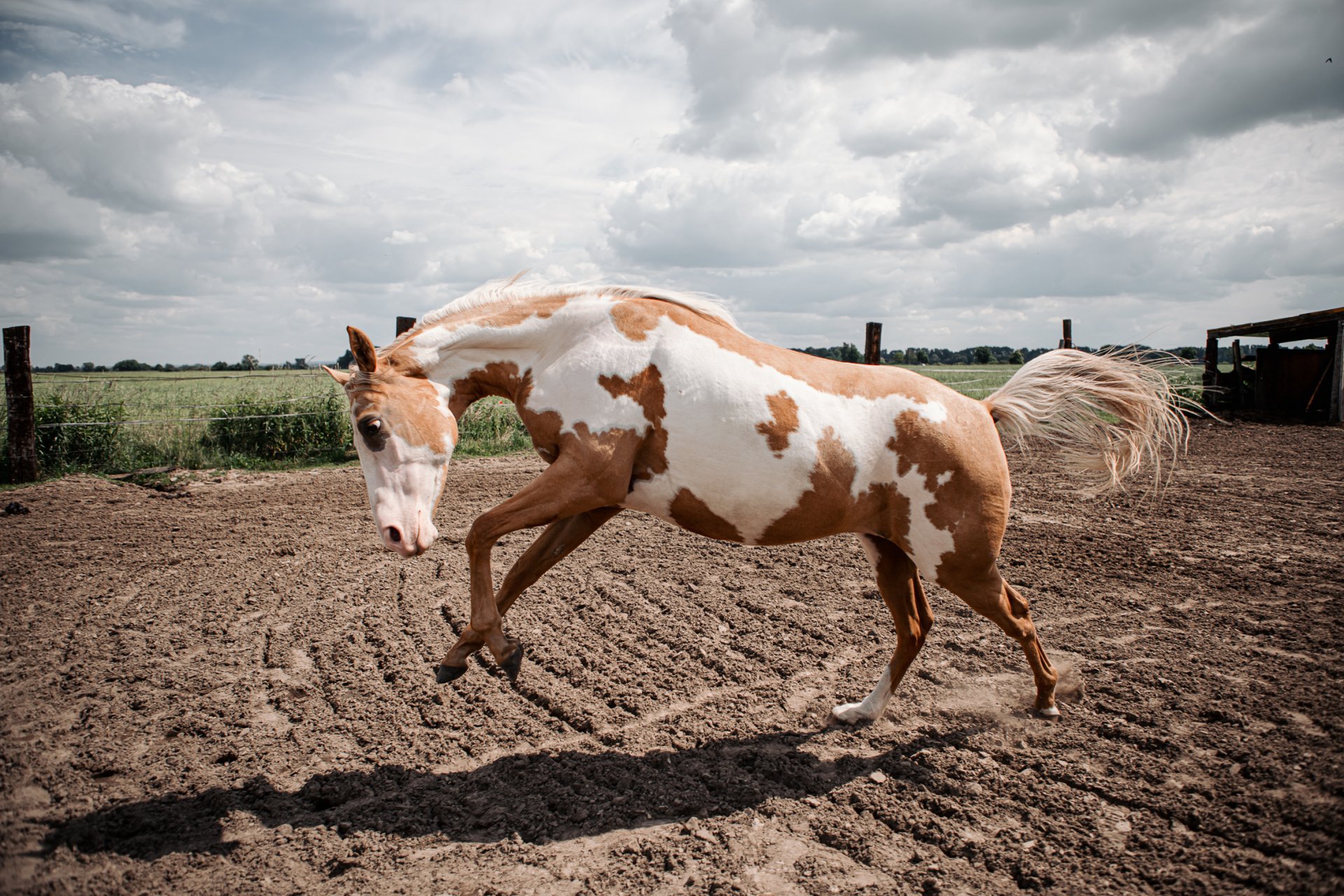
The colt is rated by the Czech judges as one of the best in the Czech Republic with the best movement. It is the only foal that can be raced by children. Last year, a 12-year-old girl with cerebral palsy was competing with him, leading him over the obstacles. Our colt was already mastering these prescribed "moves" at less than a year old. He's not yet a horse to ride in races, but a human leading him and running beside him. In July we went to the national championships with the colt. We were originally supposed to go to the European Championships in Germany at the end of August, but unfortunately it probably won't happen.
Do you and your kids do special races for the handicapped?
Our children with disabilities are so skilled that they can ride normal races for healthy children up to 11 years old. One little girl with a partially paralyzed half of her body finished 3rd last year. The judges are very supportive of such children and give them valuable feedback. But they judge them in the same way as healthy children. Only if a wheelchair racer is competing, he can go on the track first, so that the surface is not yet trampled.
What do they compete in at the races?
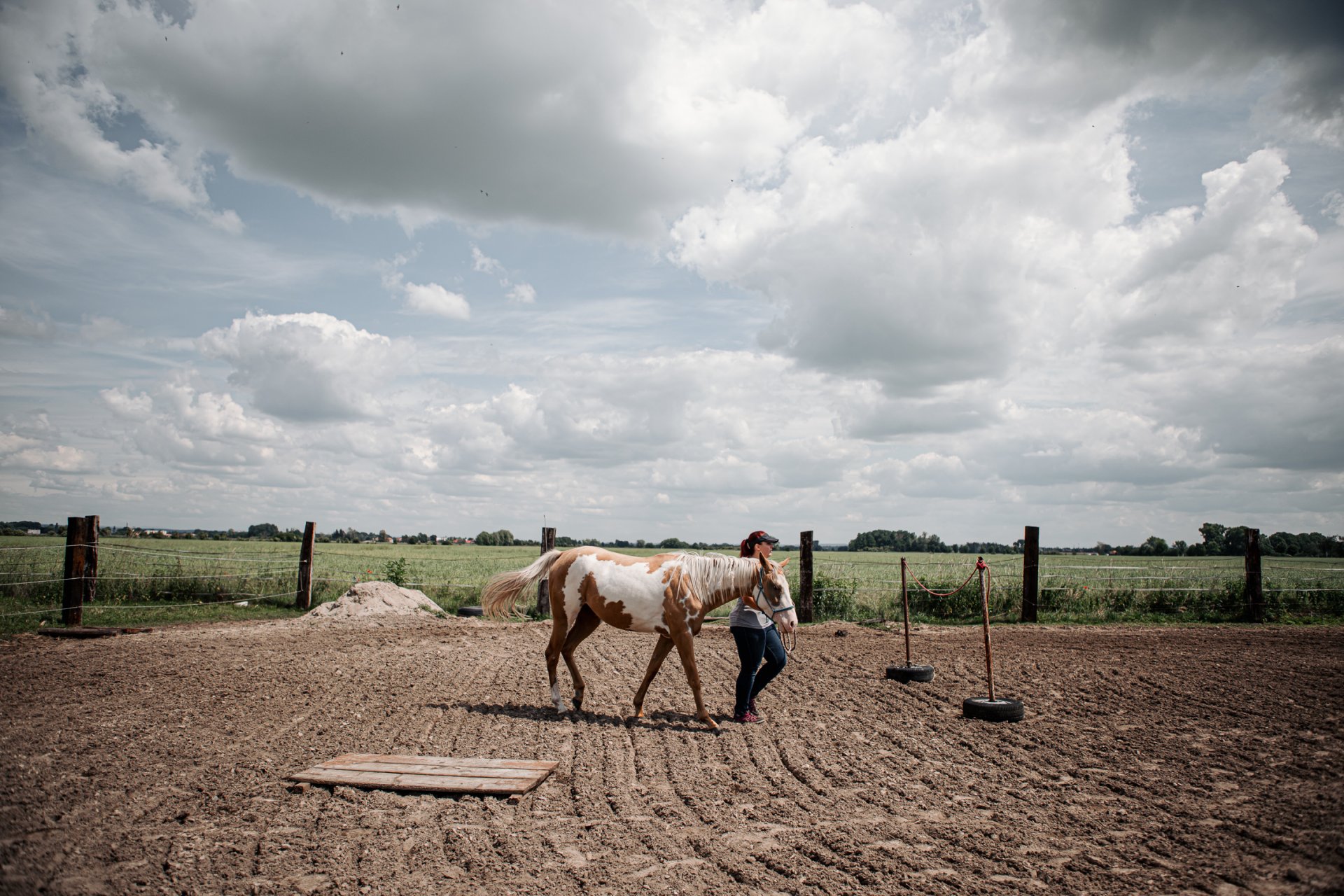
We ride western disciplines in hand (from the ground). It's a show where the child leads the horse and controls it from the ground. The horse is judged on how well it can obey, as well as accuracy of movement. We communicate with the Western Riding Club, which sponsors western sport in the Czech Republic. Unlike in the United States, where this type of riding is widespread, there are no precise competition rules for handicapped children. However, the Club has offered us to participate in the creation of these rules, taking into account our experience. We are able to say what a disabled rider can do, or what the exceptions to the rules should be.
How many similar facilities are there in the Czech Republic?
There is only one other stable directly dedicated to parawestern. There are many facilities registered with the Czech Hipporehabilitation Society, which vary according to what professional tests they meet and what instructors and physiotherapists they have. For example, the Apolenka farm in Pardubice offers rehabilitation with a physiotherapist, psychotherapy with horses is available at psychiatric hospitals in Kosmonosy and Bohnice in Prague. The Epona association in Brno focuses on sports for the handicapped. An orthopaedic surgeon comes directly to us, with whom we consult what is suitable for our visitors. I myself should take the equestrian exams from the Ministry of Education in September.
What kind of children ride with you?
Children with physical or mental disabilities, autistic children come here and the horses help them a lot. They are equally suitable for anorexics, children with ADHD, cerebral palsy, even Crohn's disease. We try to be flexible and accommodating with attendance. It is often the case that children are not feeling well and cannot make it to their scheduled appointment. This is not tolerated at all by many stables. However, everyone is welcome to come and ride with us. Healthy children also come to us and everyone cooperates with each other. In addition, horses are now being used for therapy for the elderly.
What are your future plans?
My immediate goal is to pass the Hipporehabilitation Society exams and have an accredited horse that is able to work with people with disabilities - this will allow children to ride the horse during competitions. We are also looking for a larger piece of land with a hall, and we would like to have a permanent employee to run the ranch so I can focus on training. We would also like to start a club for children aged five and up, where children with and without disabilities could meet. Our current concern is finding a car that could be used to travel to races. So far, we have always rented one. It has to be a van or transporter that will pull a trailer with horses and take us and all the equipment we need to the races. Often there is no accommodation at the races, so sometimes we also sleep in the car. We are also looking into buying a new saddle, as our horses are outgrowing their old ones. And we would like to make a nice Facebook and website.
Hipporehabilitation
Hipporehabilitation is used to treat patients who have physical or mental problems. The closeness of the person and the horse helps to improve motor skills and remove various "fears". Handicapped children compete with able-bodied ones in races where they lead horses over various obstacles, logs and have to change speed. Most of the races are part of the See See Cup. The greatest achievement of one of the three horses that are at the ranch is the 2nd place in the New Generation Horse Show, which is held with international participation in Slany.