Česky
Česky


What fascinates you so much about the cribs you collect?
I'm a Christmas person in general. I also don't like the shopping rush and that the pre-Christmas ads start in September, but I love Christmas itself. Even though I'm religious and should be more into the joy of Easter, I still find the feast of the birth of Jesus the most beautiful. Even as a child, I was fascinated by the nativity scene. We used to have only a simple paper one by Vojtěch Kubasta (our most famous paper crib artist), but Jesus in a manger with mommy and daddy in a cold cave or barn with a donkey and a cow breathing down on him had magic for me.
Can you remember when you got your first wooden nativity scene?
Twenty years ago, when my wife and I took over my parents' cottage in the Giant Mountains because they couldn't afford it anymore. In the attic I found a hand-carved and painted royal nativity scene. I had it restored and then we built it at home in Prague at Christmas together with my sons, who were still young.
And the moment when you started collecting them?
When we were repairing a wall at the cottage, the craftsmen offered me another nativity scene for sale. They told me to have two for each son. I said, "Well, that's something, it'll be a memento of my parents! So I got a second one, then a third for us as parents. And suddenly people from the village started bringing me things from the First Republic, which they had destroyed in barns somewhere, and I had them restored and it became a mini-museum of antique things. Like the card table I remember my dad used to play on in the pub. It had a canvas card table and copper change trays in each corner. And that's when I started collecting other cribs. There were five, seven of them, and it was off...
Did you count how many you have now?
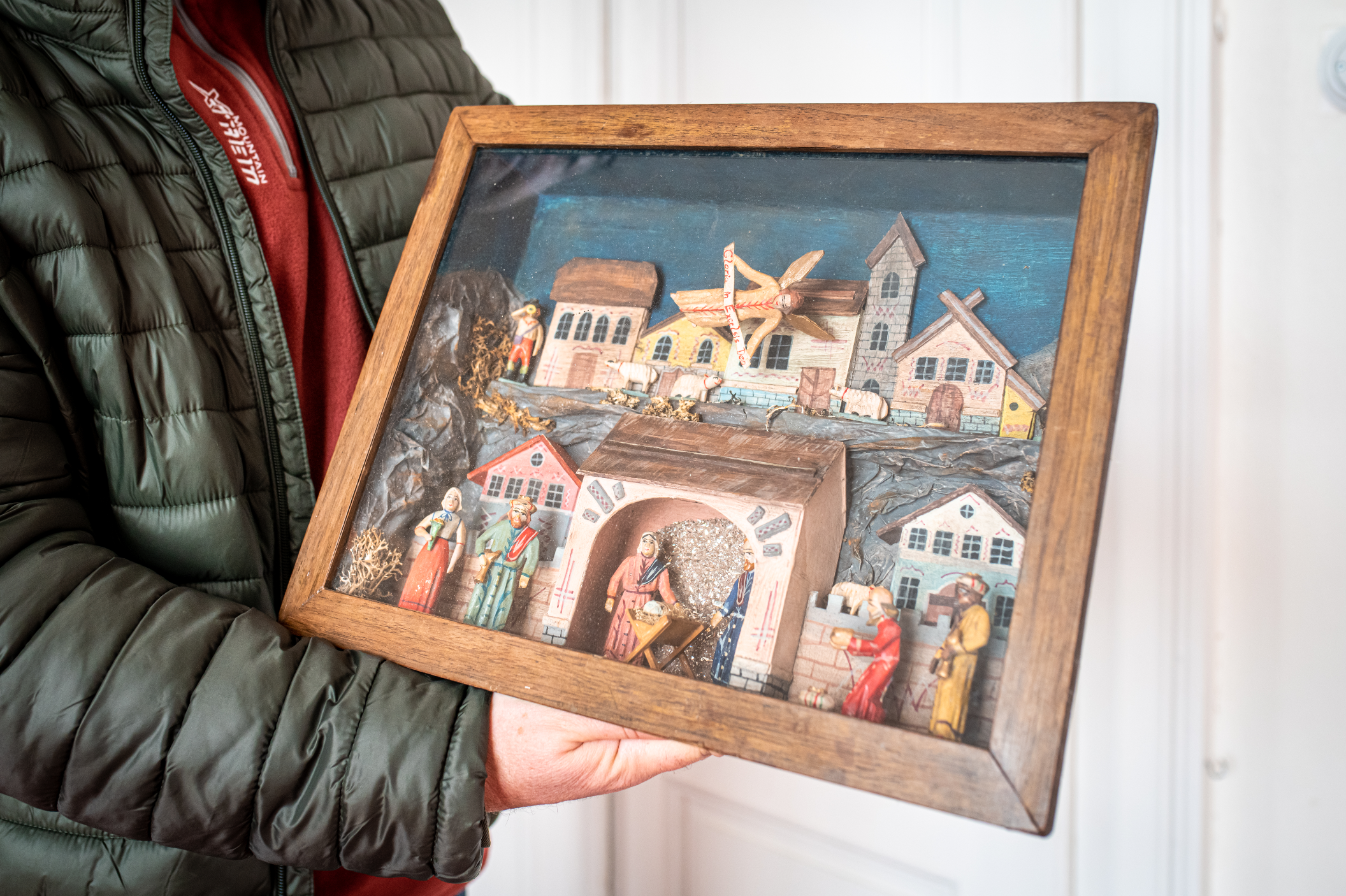
Fifty or sixty of them. They're all wooden cribs from the Krkonoše and Podkrkonoše. They're similar in style, but the figures are all different, of course. And then I have ten other nativity scenes that have nothing to do with the Krkonoše, but I have a personal relationship with them. Some of them I brought back from my vacation. From Mauritius, Armenia or Bethlehem in Israel.
How do your cribs differ, for example, in size or design?
I have a crib that you pick up and then one that's 15 metres long. Some of the figures are that big! (spreads his arms out a good half a meter) Tut's are originally church cribs, where the communists had to throw them out. Then I have the nativity in a classic big wardrobe I bought from a retired antique dealer. It was hanging in the hallway of the prefab apartment he lived in. His daughters lived outside of Prague, and although it was family gold to him, he said they hadn't opened it in eight years. When he found out I had a museum and wasn't going to sell it to the Russians who would give it to the kids to play with, he was thrilled that it would make someone else happy. One nativity scene, when it's stretched out, plays Silent Night, and then I have the nativity scenes glazed over, they're called under the slit. I also have a nativity scene that's narrative. On one side is the archangel Gabriel announcing to the Virgin Mary that she is going to be pregnant, then there is the baby Jesus and the birth of Christ, on the other side is Herod walking with the soldiers, and in the back is the Virgin Mary and baby Jesus running away on a donkey to Egypt from Herod.
I see there's no crib like a crib...
It's not! Often in the winter, more figures were carved into the crib. For example, the father's son carved it, but in a completely different way. Even if it's not the best aesthetically, because you can see the variety, I respect it. For example, I bought a nativity set from a family where the great-grandfather carved it, then the grandfather, then the father. Even though you can see that the figures are different, I didn't interfere. The figures used to be bought on pilgrimages. If the children were good, they got them as a reward. Not every family could afford a lavish nativity set right away.
What do you know about the history of your nativity scenes?
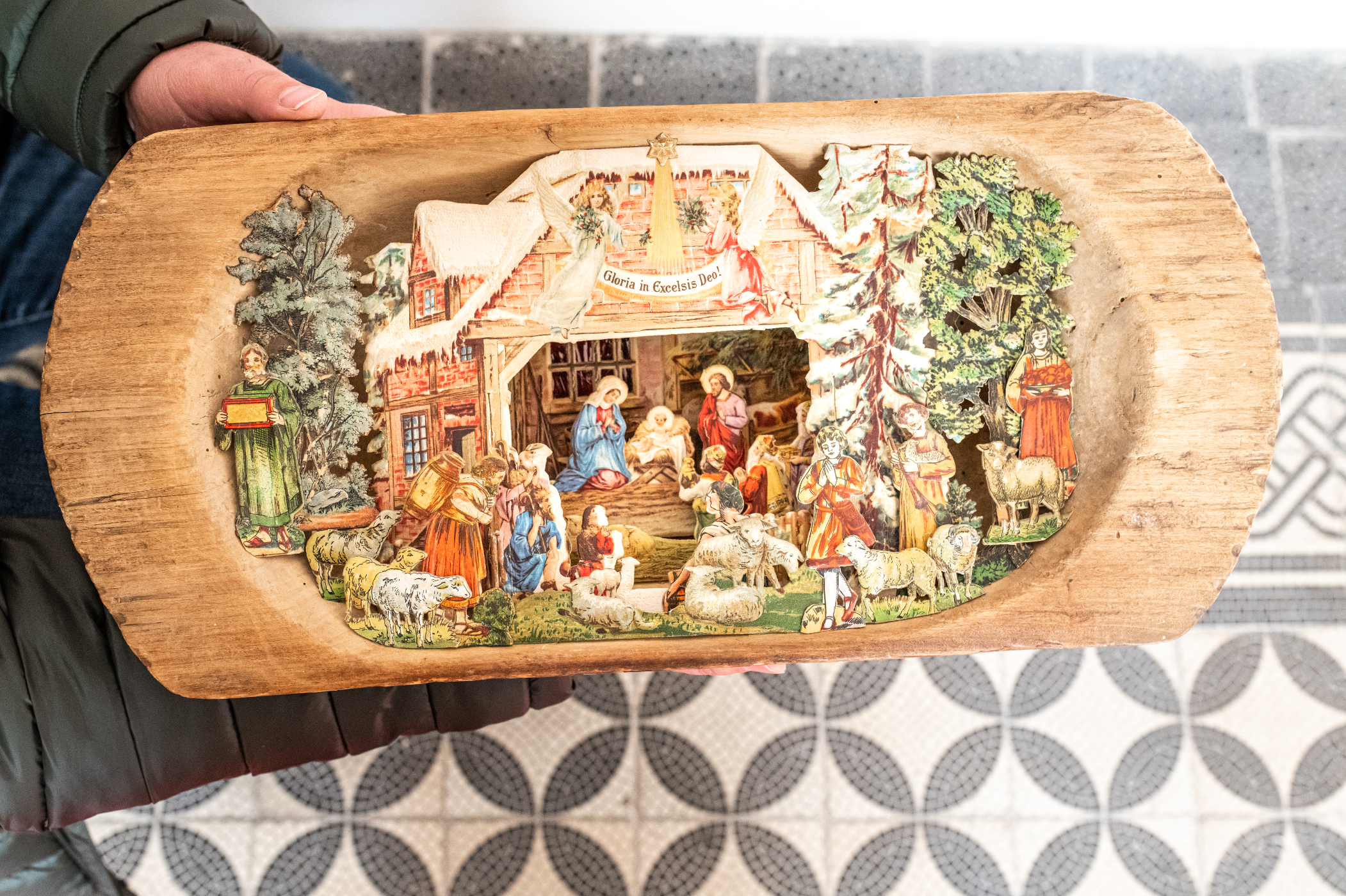
I'm not a historian, but it made me want to do some research. They used to go to church for nativity scenes. It wasn't until they banned it in the late 19th century, between 1850 and 1880, that people started making them in smaller versions at home. Based on the style of the carving, the restorer and I are able to tell if it's late 19th century, interwar period, or First Republic. The oldest nativity scene I have is from sometime between 1860 and 1870.
In my research, I was surprised to find that there are butter or gingerbread nativity scenes in our area. What materials are yours made of?
While I could buy cribs of all kinds on Auction, I only have wooden ones. But I do have two rarities. I got one crib made of blown glass. The glassblowers told me that it was one of the oldest nativity scenes made in Železný Brod, and that there was a second one in the local museum. Well, I'm just having another unique nativity scene restored, with cottages and wax figures. Repairing a broken roof is not as difficult as making a new leg or hand for a figurine!
I wonder what Christmas is like in your area. I mean, you must have nativity scenes all over the house...
I have most of them stashed in the barn stuck to the cottage in the Giant Mountains, but there are quite a few elsewhere around the house. The guys in the village have my keys, and when they have visitors, they jingle me if they can show them the cribs. When I'm there, I put up a sign saying: 'Today we can see the cribs, tonight I'll be home.
Looks like you're a long way from putting up a flag! Can a stranger ring your doorbell?
It's not an official museum with opening hours, but if I'm there, he can. Still, it's mostly of interest to people around Christmas time. That's usually what our day looks like, we go skiing in the morning, come back at four, and by eight we're showing around the barn with the nativity scenes...
This year everything will be different, because your nativity scenes will be on display from December 6 to January 6 at the castle in Hořovice. Is this your first exhibition?
Yes, it's the first big exhibition outside my barn. This year I will leave only the leftovers at home and most of them will be here in the castle. I originally wanted to do it in Vysoké nad Jizerou, which is the closest big town to the cottage, but for space and other reasons it didn't work out. I have a relationship with Hořovice too, because it's where I heal and where I have my medical roots. In the second half of December I should have some guided tours for the public. I'm sure the information will appear on the website of the Hořovice castle. I would also like to decorate the castle with an old Krkonoše Christmas tree, i.e. with original village decorations made of blown glass or paper covered with fine crushed glass. I also brought some old wooden toys that the kids used to get.
When is the right time to build a nativity scene? Advent?
They are built at the beginning of Advent, but we don't build them at home until just before Christmas, just like we decorate the tree. We have a tradition for that. After one of us builds it, someone else in the family comes to inspect it and says: You've got a very nice one, but this one figure needs a bit of a twist. (laughs)
He could have built the crib differently, in his own way.
But it's built differently every time! The centre, the base with Jesus, the Virgin Mary, the donkey and the three kings, is the same. But with the other forty figures, it doesn't matter whether someone with a fish is walking on the left or the right.
By the way, did your now-grown sons finally get those first two nativity scenes?
They didn't. (Smiles ruefully) Over time, I took over the whole cottage with the cribs and put my children and grandchildren out. But they can always come and see the cribs.