Česky
Česky


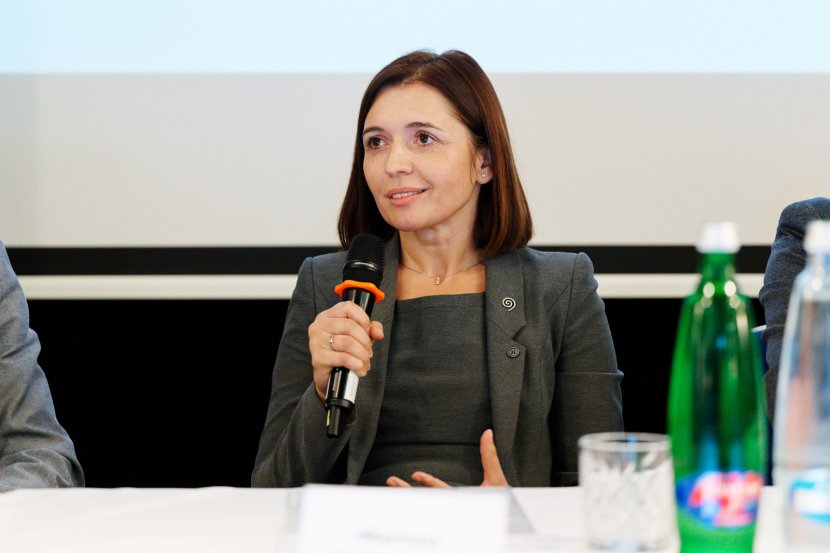
Martina Kulštejnová considers a well-established communication between the Comprehensive Cancer Centres (CCC) and the Regional Cancer Centres (RCC) to be crucial in cancer care. "It is very important that we are able to quickly and efficiently exchange information regarding patients and share medical documentation. At a minimum, this means we need information systems that communicate with each other, are compatible and exchange data securely. It is essential that we do not have to laboriously track down individual results or somehow collect them in paper form," Kulštejnová said.
According to her, these things do not work very well almost anywhere in the domestic healthcare system. "Between the time a patient comes from a general practitioner or a specialist for cancer treatment, they visit a lot of doctors and facilities. And each of those facilities may have a different information system and different standards, which adds to the overall time commitment. I think that if the described things worked well, the patient would get to the oncological treatment faster," Kulštejnová described.
Problems with bureaucracy and space
Within the oncology treatment itself, the situation is basically the same, she said. It also concerns the transfer of information between the individual centres. "When everyone has quick access to carefully maintained medical records, the progression of treatment can be better and faster monitored and the patient's recovery can be faster," says the executive director of AKESO Holding.
Renata Soumarová, Head of the Oncology Clinic at the 3rd Medical Faculty of Charles University and the Královské Vinohrady University Hospital, also pointed out another problem - related to communication and information for patients. "We are referring to space capacity. In Prague hospitals, we work in premises from the 19th century. We have nowhere to expand, but at the same time, the number of patients in our outpatient clinics is increasing at a very fast pace - not only in treatment, but also in dispensary care. There are also more and more procedures related to oncology, which means that we are struggling with insufficient space," Soumarová said.
Strengthening nurses' competences as a way
Martina Kulštejnová also considers strengthening the competencies of non-medical staff to be important for the development of oncology care. "The role of a nurse or radiology assistant is important. And it is important to remember that there are not enough doctors, which is something we hear today and every day," said Kulštejnová, who believes it is necessary to discuss which competences can be transferred to nurses. "For example, regarding medical documentation, we know that it is the nurse who organises many examinations and ensures that the patient's medical documentation is complete. Because if it is not complete, health insurance companies will not cover the care," Kulštejnová pointed out.
Therefore, she considers the establishment of a new specialisation training programme for oncology nurses, which Darja Hrabánková Navrátilová, chairwoman of the oncology section of the Czech Nurses Association, spoke about at the European Oncology Conference, to be a very good step. "Such a nurse coordinator can plan outpatient visits and inpatient care, coordinate and draw up a strategic plan for all diagnostic tests, provide a treatment plan including ordering chemotherapy, and provide education for the patient and his/her relatives, based on the decision of the indication committee on the treatment strategy and the signing of an informed consent by the doctor and the patient," Hrabánková Navrátilová described. "And I think there will be a lot of interest in the activities of nurse coordinators. I observe it also in the large number of nurses interested in completing the study," she added in the discussion.
Kulštejnová also considers the support of patient organisations to be extremely important for patients. "A lot of information is told to patients by doctors, but they don't perceive it because the oncological diagnosis is difficult and many patients' worlds are shattered. Patient organisations help patients cope with an extremely difficult situation, explain some of the more complex concepts and basically give them a sense of security," Kulštejnová described the positive contribution of patient organisations.
Source: website of Zdravotnický deník, Jakub Němec, 12 January 2024, photo: Radek Čepelák