Česky
Česky


You are said to be a willful idealist. Do you agree with that description?
I guess I've had it in me since I was a kid, that things should happen the way they're supposed to. The Czech Republic is at a high level and the health care system should correspond to that. It must be of high quality, efficient, safe and carried out in beautiful premises. There are educated and hard-working people here and I see no reason why we should be some poor cousins of Europe. But our eternal struggle is that as soon as someone starts to stand out, others push them back to the average. But we don't want that. That's why our hospitals and facilities are far from average, that's my idealism.
But you've chosen a field that...
I didn't choose it, it chose me.
What do you mean?
All life is one big coincidence, a thousand things that come together. Even when I was studying economic planning at the University of Economics in Prague, I found out that you can't plan anything in life. You have to catch the right wind, try to stay on course and not deviate too much. Of course, it would sound good that I had everything thought out and the whole hospital system planned, but there was nothing like that. It was all a coincidence.
Was it also a coincidence that you returned to the Czech Republic after your university in Prague and your stay in Greece?
I am such a typical economic emigrant (laughs). I was in Greece, but I found out that I could only do some menial jobs and that it is not easy to make it in capitalism there. I didn't have the means to do great things, and the environment was very antagonistic. There were better opportunities here, so I decided to come back. Mainly because I was offered to become the CEO of a food and cosmetics distribution company when I was 26.
Why didn't you stay with it?
It was an interesting job, we were good in the business, we were making a lot of money. But the idea of working all my life in an environment of warehouses, goods and trucks did not fill me, I always had a rather humanistic way of thinking. That is why I am still a member of the Socialist Party of Greece. In 1998, I kind of accidentally got a share in a polyclinic in Prague's Chodov and I saw this involvement in the health sector not only as an economic opportunity but also as a job that I like and where I can be useful to other people.
Twenty years ago you built the Multiscan Pardubice Oncology and Radiology Centre. Did you see oncology as a field in which there would always be enough patients?
At that time, my colleagues and I had great ambitions, such imperialistic tendencies (smile). We started to explore the whole country and see where there might be some investment opportunities. We wrote dozens of projects and our ideas succeeded in Pardubice. The hospital there was not in a good condition, they needed money quickly for modernization and we were interested in running radio diagnostics there. But their condition was that we had to take oncology with us.
As a Greek entrepreneur, did the insurance companies accommodate you?
I was a foreigner with no medical training, so at first they didn't look at me with much confidence. But I had a good idea when I found a universally recognized expert, Dr. Calta, who was the guarantor of the whole project for many years. I remained rather in the background, as the time had not yet come for the medical community to accept me.
In 2007, you acquired the hospitals in Beroun and Hořovice in privatisation. By then, the medical community must have started to take you into consideration...
When we had a diagnostic centre in Prague, there were hundreds of thousands of patients. At that time I found out that having so many people without any connection to the inpatient ward was problematic, there was no one to deal with a diagnosed patient. We had contracts with various hospitals, but the system didn't work very well. So we started to look at the idea that we could operate in inpatient care as well. Then the Central Bohemian Region offered several hospitals for privatisation, which we took part in, and the Region eventually allowed us to buy the Beroun and Hořovice hospitals. Our privatisation projects were of such high quality that we would have won everything, but it was politically untenable to get all the hospitals.
Why did you stop pursuing other hospitals in the Czech Republic at that point?
When I do something, I do it properly. And I found that I didn't have the financial or mental strength to do a really big network of high-end hospitals. So I decided it was better to have three or four world-class facilities rather than ten mediocre hospitals.
Is there an economic return on such a project? If we take the amount of investment, it comes out to something like 100 years...
I'd say even more. Actually, there is never a return, that's why big financial groups don't invest much in healthcare. Even if you make some profit, you still have to buy new equipment, add a building, etc. I don't even expect the money I've put into it to ever come back. I think of it as having some assets that I'm appreciating.
Is it possible to generate a profit in the Czech healthcare sector?
The system is set up in some kind of average. Our advantage is that we can work very efficiently even in conditions of poor performance evaluations. It cannot be said that individual hospitals make a profit, not really, but if the whole circle is thought out - from pharmacies to distribution companies and other companies around, including construction companies, to hospitals - then the whole can be profitable. Because I try to use minimal credit, I can reinvest the profits and improve medical care.
Can you have a higher quality and cheaper operation than other hospitals?
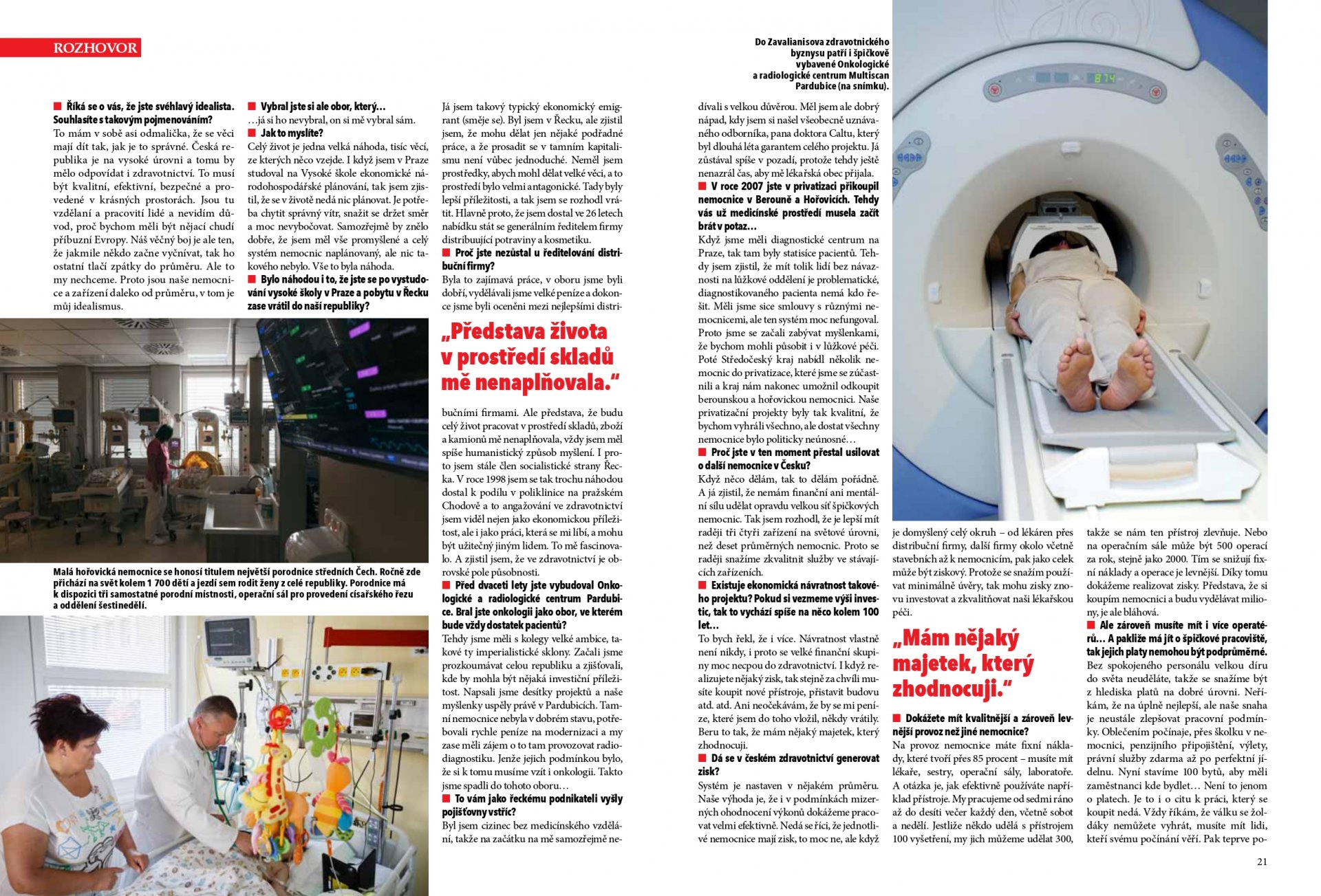
You have fixed costs of running a hospital that make up over 85 percent - you have to have doctors, nurses, operating rooms, labs. And the question is how efficiently you use, for example, the machines. We work from seven in the morning until ten at night. Every day, including Saturdays and Sundays. If someone does 100 tests with a machine, we can do 300, so the machine becomes cheaper. Or there may be 500 surgeries a year in the operating room, as well as 2,000. That way we can make a profit. But the idea that I can buy a hospital and make millions is foolish.
You have to have more surgeons at the same time... And if it's going to be a top facility, their salaries can't be below average.
You can't make a big dent in the world without a happy staff, so we're trying to be on a good level in terms of salaries. I'm not saying we're at the very best, but we're constantly trying to improve working conditions. From clothing, to the nursery at the hospital, to pension, to trips, to free legal services, to a perfect canteen. We are now building 100 apartments so that employees have a place to live... It's not just about salaries. It's also about a sense of work that can't be bought. I always say you can't win a war with mercenaries, you have to have people who believe in it. Then they perform at their best and it shows in the results. We also have a bonus system in place to reward effort. Recently, for example, I allowed all our chiefs to choose a new company car, one that they personally like. As a small thank you to people who have excellent results.
Your next project is the construction of a Mental Rehabilitation Centre. Have you assessed that psychiatry is the field of the future?
Just look all around you and see... (laughs). There hasn't been a war for a long time, we are living at a high level, and when our head is not burdened with external danger, each of us starts looking for an internal enemy. Time brings stressful situations and the media and social networks constantly convince you that the ideal way to live is to be young, healthy, beautiful and rich. Most of us never achieve this and another stress factor arises. Statistics then speak clearly that over 25 per cent of the population in the Czech Republic is struggling with some kind of psychological problem.
Have you also dealt with such problems?
Of course, and I have no problem talking about it. The Czech Republic is an open society, but talking about psychological problems is a big taboo. If your leg hurts, you tell everyone, but everyone keeps their head problems under wraps. I never hid the fact that I ended up in a psychiatric ward in Bohnice. When you're working under pressure from morning to night and dealing with big financial transactions, sometimes you can't take it. And I saw that I couldn't do it alone.
And this experience led you to the idea of creating a modern psychiatric centre?
No, I definitely didn't want to build a psychiatry for myself (laughs). But I have seen how many people's health problems are not related to the body, but rather to the head. For many years this has not been paid attention to in the Czech Republic, psychiatric care here is underfunded, and therefore the level of care is not what it should be. I would be happy if someone else would build such a centre, but it would be left to me (laughs). I hope that when we finish in four years' time, we will show the world that you can provide psychiatric services in a beautiful environment and to a high standard.
What should 21st century psychiatry look like?
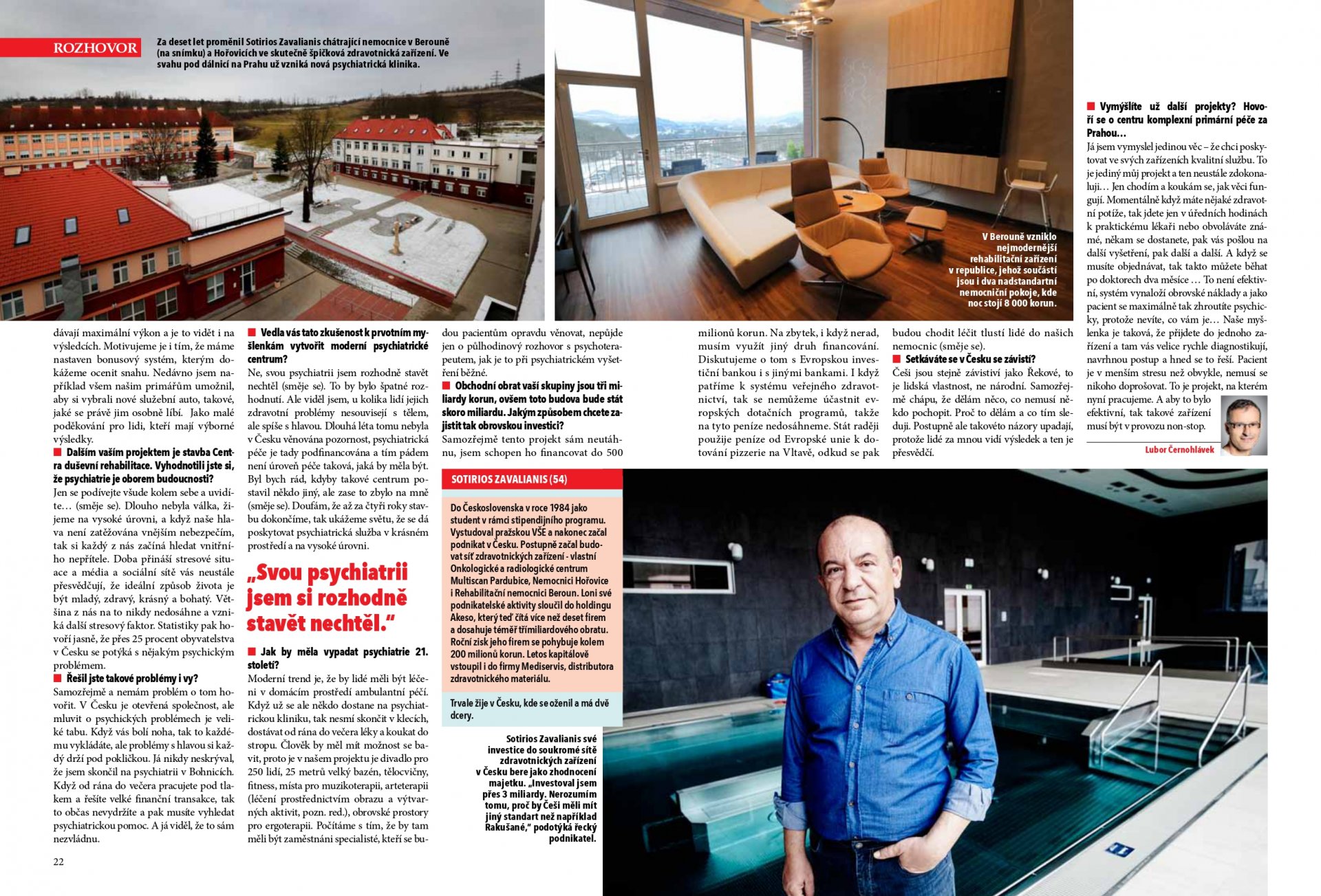
The modern trend is that people should be treated at home in an outpatient setting. But if someone does get into a psychiatric clinic, they shouldn't end up in cages, receiving medication from morning to night and staring at the ceiling. People should be able to have fun during treatment, which is why our project includes a theatre for 250 people, a large swimming pool, gyms, fitness rooms, places for music therapy, art therapy (healing through painting and art activities, ed.), and huge spaces for occupational therapy. And there should be specialists employed there who will really pay attention to the patients, not just a half-hour conversation with a psychotherapist, as is common in psychiatric examinations.
Your group's turnover is three billion crowns, but this building alone will cost almost a billion...
Of course, I can't do this project alone, I can finance it up to 500 million crowns. For the rest, although I don't like it, I have to use another kind of financing. We are discussing this with the European Investment Bank and other banks. Even though we belong to the public health system, we cannot participate in European subsidy programmes, so we cannot access this money. The state would rather use money from the European Union to subsidise a pizzeria on the Vltava River, where fat people will then come to our hospitals to be treated (laughs).
Do you experience envy in the Czech Republic?
Czechs are as envious as Greeks, it's a human trait, not a national one. Of course, I understand that I am doing something that someone may not understand. Why I'm doing it and what I'm trying to achieve. Gradually, however, these views are falling away, people see the result behind me and it convinces them.
Are you already thinking of other projects? There's talk of a comprehensive primary care centre outside Prague.
I have only one thing in mind - that I want to provide a quality service in my facilities. That's my only project and I'm constantly improving it. I just go and see how things work. At the moment, if you have a health problem, you go to the GP during office hours or you call friends, you get somewhere, then they send you for another appointment, then another and another. And if you have to make an appointment, you can run around the doctors for two months like that... It's not efficient, the system incurs huge costs, and the most you can do as a patient is to have a mental breakdown because you don't know what's wrong with you... Our vision is that you come to one facility and they diagnose you very quickly, suggest a course of action, and it's dealt with immediately. The patient is less stressed, he doesn't have to ask anyone. This is the project we are working on now. And for it to be effective, such a facility has to be in operation round the clock.
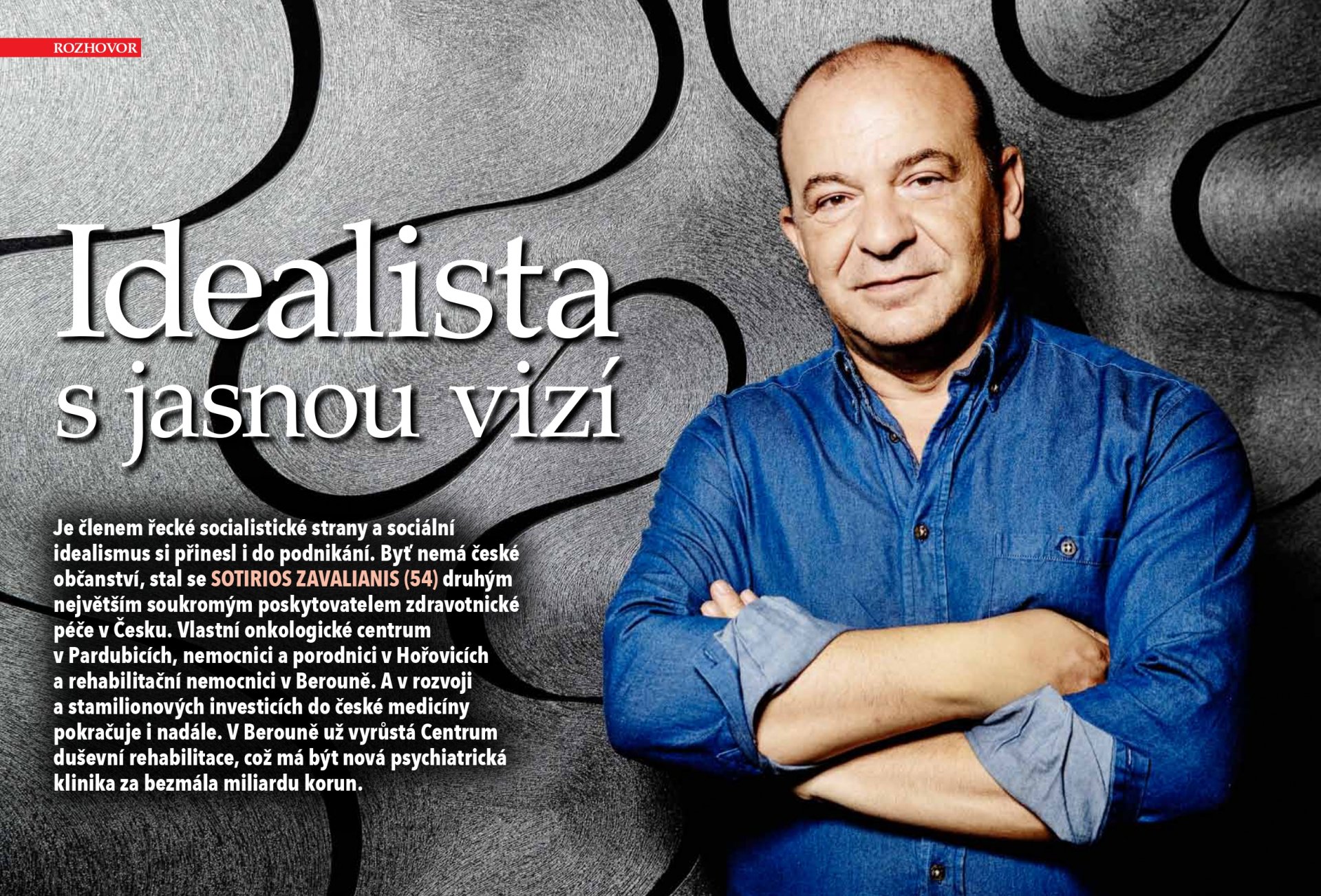
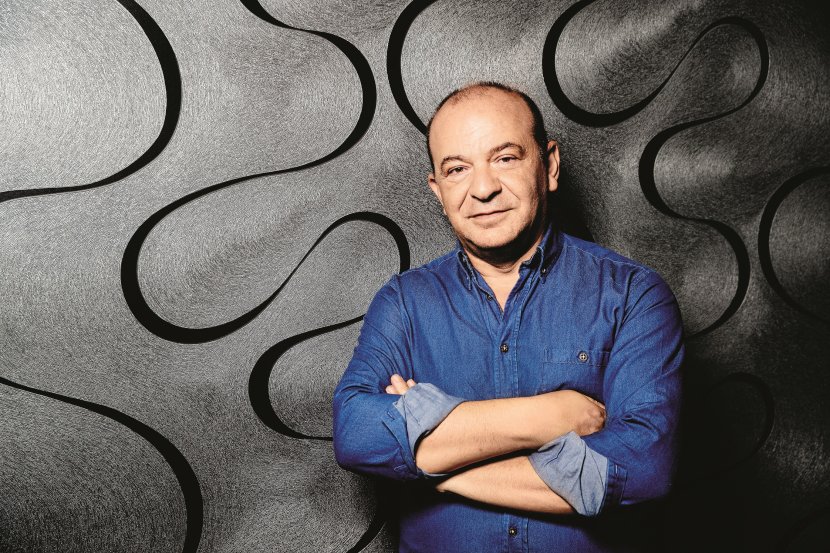
Sotirios Zavalianis (54)
He came to Czechoslovakia in 1984 as a student on a scholarship programme. He graduated from the University of Economics in Prague and eventually started his own business in the Czech Republic. He gradually built a network of medical facilities - he owns the Multiscan Pardubice Oncology and Radiology Centre, the Hořovice Hospital and the Beroun Rehabilitation Hospital. Last year, he merged his activities into the Akeso holding, which has more than ten companies and a turnover of almost three billion. The annual profit of its companies is around CZK 200 million. This year he also made a capital contribution to Mediservis, a distributor of medical supplies.
He lives permanently in the Czech Republic, where he is married and has two daughters.
Source.