Česky
Česky


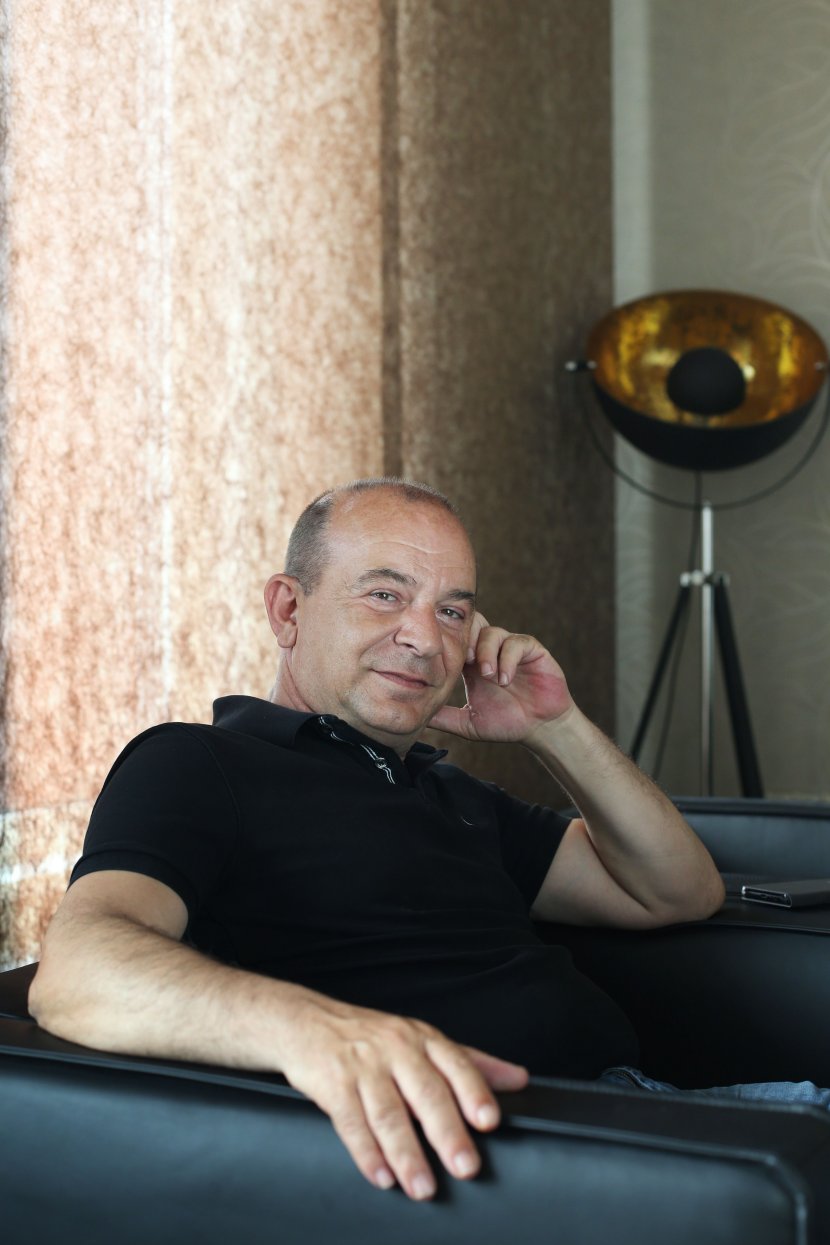
It is suing the Ministry for Regional Development and the Central Bohemian Region, and is also contacting OLAF and the Antimonopoly Office. It is fighting for the right of a private operator providing a public service to be treated on the same terms as state-owned health care facilities. It also wants to bid for European money and not be excluded from the competition for many years under various formal pretexts. After almost three decades of living in a free society, businessman Sotirios Zavalianis, who owns Multiscan in PI, still feels that a large part of the public feels that a private company cannot provide a public service in the health sector. You are referring to the fact that even the hospitals in Horovice and Beroun would not actually have to do all this. His healthcare facilities are thriving to the point where he no longer has to turn away patients, he has no problem with staff shortages, and he has managed to make and raise billions for new and very bold investment projects such as a mental health centre or a hospice for children. It's just that if you talk to him for a while, you soon realise that this man who doesn't mince words in conversation is used to going after his vision like a bulldozer. He would take politicians out of the health sector altogether because they bring corruption into it and they don't have the courage to tell people the truth. On the contrary, he purposefully seeks out collaborators - doctors who want to do more than their colleagues and for whom he is ready to fulfil their dreams of truly quality patient care.
Even after nearly three decades of living in a free society, a large segment of the public still feels that private enterprise cannot provide a public service in health care. Are you referring to that?
This idea is put to the people by politicians who have no other issues. Of course, the general public, who are not familiar with the whole issue, believe the populists. However, there is one binding legal framework in the country, and it does not distinguish between ministerial, regional or private health facilities. We must respect the rules that the state or the legislators lay down. The same rules, controls, regulations apply to us. We cannot do whatever we want even as a private entity.
And does the state treat its medical facilities as fairly as private facilities?
No. The unfairness is that state officials have become under the impression that they have to help state and county organisations. Forgetting about us, they try to adjust the rules so that state and county facilities are always at an advantage. We see this in the way county money is distributed. But health care should operate independently of the county budget. Counties are not there to plug holes in the health care system. Instead, it would be better to look at the whole system and if it is broken, it should be changed. Of course, it is tempting to make big politics out of health care. A politician gets points when he or she preserves or helps preserve county or state hospitals. It's such popular folklore.
In the Czech Republic there is no proper understanding of what a private operator is. There are private operators who provide aesthetic services, surgeries, lasers, nose jobs, repairs to other parts of the body. Then there are surgeries that have a slightly different regime. And finally there are us private providers who provide a public service. And that's about something else. We don't charge residents directly for services, even though we are a private facility. We're paid for by the money that insurance companies give for their insureds.
Usually, however, advocates of selective support for state or county facilities argue that the private party pulls public money out of insurance for their own profit, whereas "their" facilities give it solely for the benefit of patients.
I understand, but we are a company that provides high quality services, we make profits as an operator, as opposed to those who make losses, and we reinvest those profits in the development of health care facilities. Anyone who looks at our facilities can see that they are rather over-invested. So it is not true that we are taking money and dumping it somewhere. If we were to do something like that, there are authorities that can check us. But they cannot preemptively label us as crooks and they, being the state, are the clean ones. Most of the private operators, of which there are not that many in the country, invest, even go into debt to continue to invest, and the services they provide are not inferior to those of the state or county organisations. The difference is that we have a vested interest in not going out of business. We will therefore choose better management. We do what patients need. My hospitals are general hospitals, they do all the care and they don't pick raisins to make a profit. We do internal medicine, ER, neurology, just areas that no one can say are lucrative.
Let's just stop with internal medicine. Many small and regional facilities have internal medicine departments in total disrepair and justify it by saying they can't do it because insurance companies won't adequately pay for the care. How do you make your internal medicine work?
Internal medicine, by definition and because of the current reimbursement mechanisms, is a loss-making business. But neurology, infections, psychiatry, etc. are similarly underfunded in a large number of specialties. Despite the fact that the internal medicine department is loss-making, it must exist at the highest quality because it shows the quality of the whole hospital. The hospital must be seen as an organism that functions as a whole. We cannot say, in a partial way, that it is worthwhile and that it is no longer worthwhile. There have been such efforts by some experts, but the hospitals that have gone along with them have soon come to an end.
The private operators whose facilities I have seen, such as Vamed Medittera here in Central Bohemia, Privamed in Plzeň, or the facility in Šumperk, where there is another operator, provide quality services. We have the freedom to choose our hospitals, and if private operators were providing poor services, they would have gone out of business long ago. They probably work well if they still have patients.
Here in Central Bohemia there is a dense network of hospitals, yet you have a lot of patients, do people seek you out?
Yes, they do. There's a bad habit in the Czech Republic of always pointing out things that don't work. When people talk about privatisation, everyone thinks of Poldi Kladno. Why don't they think of Skoda, which has become a global company that sells more than a million cars a year? Of course, bad decisions have been made in the health sector, and bad operators have emerged, but we cannot take this as a blanket. We cannot simply say that everyone who is in the healthcare business must be a crook and their only ambition is to kill people.
After all, we have examples of both bad and good facilities in the state or regional sphere...
And some heparin killers didn't show up in private hospitals. They occurred in a state hospital.
That's an extraordinary event that could happen anywhere.
Yes, it can happen anywhere. But if something like this happened in the private sphere
Would that be a halo?
I think so.
On the other hand, I have to say that the hospital network in the country is not determined by a gazette. The only criterion is who has and who doesn't have a contract with VZP. If we have a contract with an insurance company, we are figuratively providing a public service. However, everyone knows that the hospital network in the Czech Republic is too dense. The state, in order not to have to close some of them, seems to forget that by joining the European Union, it became obliged to determine the network of hospitals. The system is still somehow working, and people are living off what politicians feed them, namely that everyone will get everything in the highest quality and completely free of charge. However, the truth is a little different.
However, people know how to find quality, or rather they go where they are treated well or where they have good references. Can health insurance companies do the same? When you negotiate reimbursement with them, do they care how you take care of patients?
They don't. The insurance company only cares about their spreadsheets. If it wants to cross something out, it pulls up the spreadsheets and calculates, for example, whether or not there's a staff shortage. They don't check the buildings, the areas where services are provided. They are not interested in what conditions the patients are in, what rooms they are in, whether there are sanitary facilities or not, what the equipment is like, what the materials are like, just nothing. They are like the old days - they don't care about quality, they give you money and do what you want with it. There is no effort by insurance companies to pay according to the level of service provided and there won't be for a long time. I have repeatedly said that an operator, for example in an LDN, who has air-conditioned rooms for two clients each, large gyms, plus therapy, plus other services for patients for free, gets the same money as if he has six-bed rooms with no air-conditioning, no ventilation and one bathroom in the corridor. So there is no pressure to invest in health care, to improve services. Nobody is interested in this aspect.
But you're investing anyway. How do you actually run your business in this environment?
Increased efficiency. Of course, as soon as someone hears this question, they immediately have a clear answer: you have corrupted everybody, you have a higher individual rate, and therefore you are stealing from the system, and therefore you are making a profit. The truth, however, is quite different. Our hospitals were the 85th lowest paid hospitals in 2016. I have an individual rate well below 30,000 crowns. The conditions that we have are much worse than what regional or teaching hospitals have. We manage, not because we get better payments from insurance companies, or we get a better individual rate than other hospitals, but because as a private entity we have management that knows their job. We try to make the most of both the machines and our staff.
If the Czech healthcare system is legally set up in such a way that different operators, private and state, should provide public services side by side, and reimbursement should be decided fairly according to the quality of care they offer, do you feel harmed by the state's approach? How do you defend yourself?
I don't feel aggrieved because when I entered the game, the rules were set. I knew what I was getting into. I can't start crying now that I didn't know. I just don't like some things. I'm trying to change them, but for me it's more of a philosophical consideration than a factual one. Our facilities are thriving, we're investing heavily, we have, if I may say so, happy employees. We try to do the best we can for them at any given time.
I do not like the way European money is distributed and the fact that I have not had the right to apply for any European project for the last ten years. I am trying to prevent that. So far, unsuccessfully. I also do not like the fact that we provide the same services as other hospitals and they get, for example, five million a year for the emergency room and we get nothing. This year, when Mr Kupka took over the Central Bohemian Region, we were challenged for the first time, and perhaps the playing field for emergency rooms will be level, at least in this respect. So far, we have signed a contract and we are hoping for set rules. But for ten years we have been overlooked.
But when the county or the state supports its facilities, it must be hurting you in the competition...
Yes, well, it does, but it's more accurate to say it bothers me. It bothers me when we have a hospital next door that invests from a state-guaranteed loan and is subsidised by the county, which pays the interest. The Kladno hospital had a fall of over CZK 90 million, and they are guaranteed a loan of almost CZK 2 billion, which will be due in two or three years, and it is clear that the hospital will not build up a reserve by then. Again, the region will take two or three billion and pay it in one lump sum or negotiate a new loan. The county subsidises loss-making paediatrics, loss-making pavilions, etc., or tries various loopholes where they fix the car park so that they can pour money in. Yet their hospitals are underinvested and in trouble. Yet we are able to function without these subsidies and have luxury hospitals.
What specifically bothers you about European subsidies?
That is a chapter in itself. European money should probably stop. Because, to put it mildly, it is a way for politicians to corrupt companies. I understand that first they work out who gets the money. Then some national interest is put on it, a programme is made out of it, and then the money is distributed. Unfortunately, for the last ten years, we have always been excluded. No one has given us a chance to represent any of our projects. And if we have ever presented a project, they have found some way to exclude us. Of course, European money would be a huge help to us.
Could you give us an example of where you think you could use European money to benefit not only the development of your facilities, but, let's say, the people of the region more broadly?
For example, we have prepared a project on a new concept of psychiatry. We wanted to build a super-functional facility in Beroun that could help a huge number of people with various psychological problems. There is currently a huge psychiatric hospital in Bohnice, Prague, but unfortunately they forgot to invest in it for several decades, and although the staff and doctors there are doing their best, the facilities and the state of the buildings do not help them at all. Then there is the very high-quality project of the National Institute of Mental Health, which has some 60 beds, and then there are twenty or thirty beds in each of the teaching hospitals. Everyone says that this is an unsatisfactory state of affairs. We therefore wanted to contribute to improving it and to invest a billion, of which we asked for 400 million from the European Union and 600 million would be paid by us. Yet they found reasons to exclude us from this. We read in the media that tens and tens of billions could not be drawn down in our country because there were no quality projects. But if we put forward a quality project, they exclude us.
What reasons were given for excluding your application?
They always find reasons. They say our project exceeds the standards of the Czech Republic. Well, we had a cinema, a theatre, swimming pools and other things. So I guess we should have had a lot of beds in the room and one broken toilet in the hallway. The other thing they accused us of was that the project was not in the city or on the grounds of the teaching hospital. I could still understand that it was supposed to be downtown, but why on the grounds of the faculty hospital? Another argument was that our project would drain a large number of staff from other departments. Finally, to give it some scientific argument, they said that we did not meet the criteria for reform. But we already have a building permit for our project.
Do you want to go ahead with the project yourself?
Of course! We don't take European money to build a project. It was supposed to be extra money that could have made our original idea even better. So we won't be building it for three years, as we originally intended, but for six years. We will pay for it out of our own money, but I will not give them the pleasure of having such an interesting and useful project trampled on.
In addition, you have also taken up the fight for your rights, even through the courts...
If you're in the mood, I can give you the entire file of lawsuits. We've got it beautifully written, but so far there's been no success.
Why are you doing this?
Because I'm annoyed at the helplessness of the citizen in the face of these huge stamps hanging over his head. You just go somewhere, say something and the person in question has that stamp to blow you away with. And you're helpless. I'm convinced of my truth, and that's why I got into litigation. They may not have a short-term effect, but maybe sometime, after a few years, we will see some deeper changes in the system based on our efforts.
In a country where the stamp has been a powerful weapon since Kafka? You are going, I would almost say, against historical experience.
I must defend myself. Take, for example, that you get a letter from which there is no appeal. And who is the God who determines that there is no appeal? The Minister writes to me that there is no appeal against her decision. The Pope and the cardinals met and decided our fate. And I cannot accept that the Pope has decided my fate. I want to decide my own fate, At least try to decide for myself and not have some rubber stamp decide for me.
So you're currently suing the Ministry of Regional Development, the county?
Yes.
And who else, the insurance company?
No, not the insurance company, I'm not that much of a hero. The insurance company feeds us. But we are also fighting within the European Union to point out the state of affairs in the Czech Republic.
But in one field you have successfully penetrated the network of state facilities, you are a major player in oncology...
Yes, we are a private entity, but we operate throughout the Pardubice Region, we have close cooperation with Pardubice Hospital and together we have created a comprehensive oncology centre. Without European money, we are the third largest centre in the country in terms of the number of diagnoses, we are fourth in terms of the number of doctors, and we have already exhausted our capacity in terms of success rate. A month ago, we started building a new pavilion for clinical oncology because we have such an overflow of patients that our premises are no longer sufficient. We hope to have the new pavilion up and running sometime next spring.
But why is it that you have managed to break the exclusivity of state facilities in the field of oncology in particular? Was it perhaps due to the more open approach of the professional society?
There was a general opinion that oncology was the most loss-making activity. When we went into the project, many people probably said let's bathe in it. So there wasn't much resistance. They saw that we had invested almost a billion and thought we couldn't succeed. But we had the confidence of the top doctors who went along with us. We have been an important part of cancer care in the Czech Republic for 18 years.
When you want to invest a billion, how do you proceed? Do you convince the banks? How do you put together the money for a project that's in doubt as to whether it's going to be a loss?
I own the company myself and don't use bank money much as an investment tool. Of course, we have some small loans, but they represent some 65 percent of annual profits. I have the money I earned in the previous business, plus any profits that our holding brings in are reinvested. Now I am also trying new financing instruments. We have been in talks with the European Investment Bank, just for example about the psychiatry mentioned earlier. We have progressed in these discussions and I will see how I turn out, hopefully positively. Do not forget that I have been in the health sector for 20 years. We can do our job, we can build efficiently for example, all with the help of our companies. As a private entity, we can invest better and more efficiently.
Miloslav Ludvík, former Minister of Health, claims that when public health insurance was established in the Czech Republic, investments were forgotten. Therefore, the system does not allow hospitals to earn money for investments. That is why he proposed, for example, that part of the revenue from excise duties be transferred to this purpose. Is he right?
Hospital care in the Czech Republic is underfunded. If we subtract the centre's drugs, we can see how much money actually goes into hospital care. It's really very little. For many years, there has been no investment and a huge deficit has been created, as can be seen in the way some of the teaching hospitals in Prague - Bulovka, Karlák or Vinohrady - look. We have invested continuously, we have taken care of our property, that's why our hospitals look different. If you don't care for decades and just paint, then of course there comes a time when massive investment is needed, even though the Czechs used to build beautiful and durable buildings. So Mr Ludvík is right, he has come up with a way of dealing with it, but I feel that it is just circumventing the system instead of dealing with it.
So what should politicians do to improve the situation in the health sector?
The first thing politicians should do is to leave the health service. The Czech Republic has a large number of experts who would know what needs to be done. The level of healthcare available to the average citizen in the Czech Republic is high. However, unless we carry out certain corrective manoeuvres, I fear that what the whole world envies us today will gradually go to waste. My expert friends, because I do not consider myself an expert in health care, tell me that the primary care network should be rebuilt. The population should live healthier, eat better, move around more, and we should encourage our children to do the same, because it is one thing to cure disease and another to prevent it. So we should first focus on education about the right way of life, then on changes in primary care, and then redefine the hospital network and the number and scope of teaching hospitals.
So, should we rebuild the structure of the Czech healthcare system?
There is no need to completely overhaul it. We should preserve what is good. But primary care does not work very well in the Czech Republic, everyone knows that. That is why we should focus on it.
What does that mean? Should more money be spent on primary care?
It is not just a question of money. There should be polyclinics in towns and cities to make it easier for hospitals. I am not convinced that the GP system is workable, there is no tradition. The role of primary care has therefore been inadvertently taken over by hospitals. Go to Motol and see what people sit there every morning! Hospitals should have their proper role, not substitute for primary care.
Would you, as an entrepreneur, go into the business of building clinics and primary care? Is that an area that would interest you?
My physical capabilities are almost exhausted. I have no ambition to expand what I have, but rather to improve it. Mayo Clinic isn't on every corner either, there's only one in America. I'm not saying that I'm going to create a Czech Mayo Clinic, although I would like to. I would like to improve what we currently have. Expand and add services. We don't have the company structure or the mental and physical strength to expand.
Are you still the type to run the company consistently on your own, or have you come to rely on other people as well, if you compare the time when you started and now?
Well, unfortunately I haven't improved much in that respect. When we started, we were a two-man operation. Me and Dr. Calta, then we brought in other associates, and in the meantime Dr. Calta died.
I have a vision. I'm trying to get it understood and shared by a large number of people around me. I think I've succeeded. We run facilities that are patient-friendly. We want to be an example not only in the Czech Republic. This is my vision and I try from morning to night not to deviate from it.
What are your plans for the future?
We are very good at what we do. Our fellow citizens come to us in large numbers. We have unfortunately become victims of our success. People want to come to us, but we've reached capacity.
Human or space?
Space, beds, operating theatres. Some examinations or operations take more than six months. And at the maternity ward, we have to stop admitting mothers several times a year. We have about 1,800 births a year. If we are so successful and people are asking for our services, we have no choice but to expand them. Now we are launching a big investment project in Hořovice, we will build 5 new operating theatres, a new intensive care pavilion, a new X-ray department, a new, I would say revolutionary, central reception, a hospital, etc. etc. Estimated investment between 600-750 million crowns. I hope it will be ready within two years. Plus we have now completed the chronic intensive care unit for young children, which will be commissioned in two months. It has 13 beds, it will be super modern, it's second to none. In Pardubice, as I have already mentioned, a new clinical oncology pavilion will be built. And since we already have building permits and implementation plans, we will also soon start construction of the psychiatry in Hořovice, which I have already mentioned.
In Prague, we are starting the construction of an outpatient clinic for children and mothers; it should operate 24 hours a day, 7 days a week. Otherwise, paediatric care ends on Fridays, you have nothing on Saturdays and you won't find much after 4 pm. It will be a child-friendly facility.
It's one thing to get the money, build the buildings. But how do you get quality people when all the operators are moaning about lack of staff?
We don't have a staffing problem. I'm not looking for people who want to work, I'm looking for people who want to make it. I always find enthusiastic professionals first on projects who don't want to die thinking they've never achieved anything in their lives. And there really are people like that. They just don't have the courage or don't want to take the risk. I have the courage, I take the risk, and all I ask of these people is that they make it happen. I'm not looking for mercenaries who are with me today and somewhere else tomorrow. I'm looking for people who want to make their dreams come true. And we're gonna make it happen.
I guess the key is to find some leaders to bring others in?
Yes, that's right. For example, Dr. Dokoupilova came to me and told me she had an idea of how neonatology should work. And I said to her, if you agree, it will be standing in a year. She had to find the staff and organise everything the way she wanted it. It was similar with a top urologist who had an idea of how urological care should work. He worked in a faculty where he wasn't allowed to do much. He came to us, we arranged the department, all the equipment, all the facilities and service, and he got to implement. Another example - a ward for young children. Dr Blažek came to us from Motol, he had an idea of how children should be cared for, so we built him a marble palace, a huge new pavilion according to the latest medical knowledge, and Mr Blažek is going to realise himself there. Dr Mojžíšová is the biggest expert in palliative care for young children, so I am working with her on a palliative care project that will cover part of the North Bohemian region and part of Prague. My whole business plan is to find people who have a life goal to achieve something, and I will make it possible for them. In fact, I ride on their drive to succeed, and I hope to be successful as well.
Do you have your retirement somewhere in your business plan?
Am I still young, or do I look that exhausted?
No, but healthcare is a long run, you are building a project that should outlast you.
Surely, what I do is of permanent value beyond one person's life. I'd like to set up a holding that will outlast several generations. I hope my daughters will want to continue it.
Text: Tomáš Cikrt