Česky
Česky


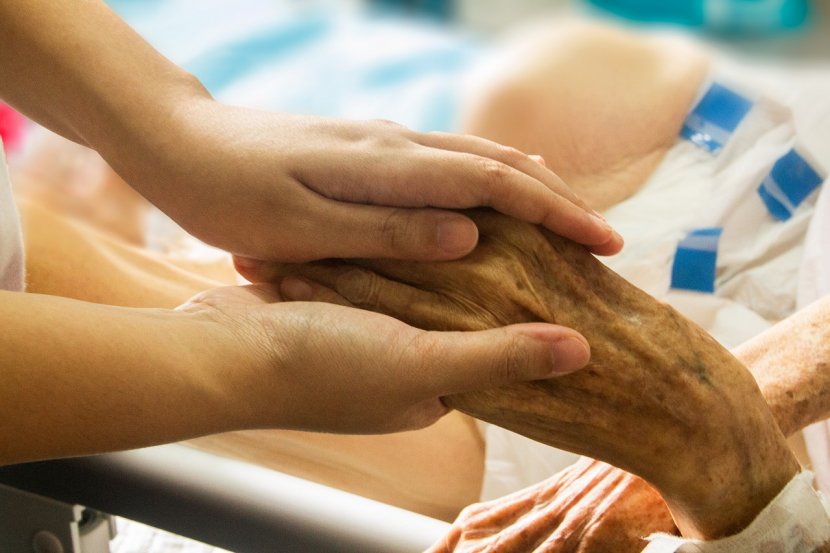
The previously little-known concept of palliative care is now being discussed more and more frequently. What exactly does it mean?
I have known the word "palliative" for a long time, since my first certification in 1989. Even then, we divided patients into two groups. Those for whom we can give radical treatment and probably cure them, given the progress of the disease, and those for whom we have only palliative treatment, which means that their comfort comes first and their own disease, which we cannot cure, second. Today, the meaning of the word has shifted more towards the period of already expected death, because, for example, we treat metastatic bowel cancer palliatively for up to four years.
What is the history of palliative care and when did it develop most in the Czech Republic?
The history of palliative treatment is obviously long, because there have been incurable patients in every era. The hospice movement originated in England. In the 1960s, Cecily Saunders founded the first modern hospice there.
I witnessed the construction of the first hospice in this country. It was established in 1995 in Červený Kostelec thanks to the initiative of Marie Svatos. At that time I had the opportunity to go to Červený Kostelec and observe the construction, and later I visited it repeatedly. After the Hospice Chrudim was founded by Dr. Marie Blažková, I served there for a year.
Which entities are involved in palliative care?
Each specialty has its palliative incurable patients, that is, the specialty must communicate that there is no longer any known cure for their patient. The field of palliative medicine has been established and is educating its physicians. But I don't think it is a field for life, the staff can only do care of the dying for ten years at most, the others who don't burn out are the die-hard exceptions. There are palliative outpatient clinics at oncology clinics, at bricks and mortar hospices, and now with grant support from the Department of Health for mobile hospices.
As far as the Pardubice Region is concerned, I have been told that there are no plans to establish palliative beds at the moment. Just for comparison, for example, the small hospital in Kutná Hora has had 12 hospices since last year.
Inpatient and mobile hospices are mainly used for palliative treatment. What is the difference between them?
Mobile hospices are also intended for the families of dying patients, especially cancer patients, while hospitals are only for patients, meaning that the family does not stay there. Stone Hospice is primarily for those that the family could not take care of and is used by about 70% of dying cancer patients by my estimate. Here, the extra cost of care is around CZK 400 a day.
You have been working in the mobile hospice of the Regional Charity Pardubice for several years. How do patients find out about you?
The social worker or oncology nurse informs the patient about the possibility of mobile hospice in the hospital. However, it is usually known to doctors and to a large extent also to the public. In addition, occasionally a red car with a mobile hospice sign drives through town.
What are the criteria for a patient to be admitted to mobile hospice care?
Home hospice is for patients who have completed cancer treatment, patients who wish to die at home, and those for whom twenty-four-hour care is provided by a family member. Mobile hospice is free, with only some medications covered.
What does a typical day's visit look like for a cancer patient using your services?
The charity is contacted in the first instance either by the patient's family or by a nurse or social worker on the day the patient is discharged from treatment. The patient is then visited at home by a hospice nurse and doctor. Here, the patient's condition and difficulties are ascertained, treatment and so-called SOS medication and nutrition are set up. At the same time, the family is informed about the possibility of borrowing important aids, setting up a care allowance, and assistance from a psychologist.
Once everything has been agreed, including the signing of the care contract, a hospice nurse visits the patient regularly. If necessary, visits are available on a daily basis, and at night it is possible to have a telephone consultation or a personal visit from the nurse in charge. The doctor and nurse visit is once a week.
To what extent is the family involved in the patient's care?
The family is de facto in charge of the patient and the nurse and doctor "only" help. In a brick-and-mortar hospice, it's the other way around, the staff cares, the family helps. If the care of a dying, usually non-ambulatory, end-stage patient lasts longer than 14 days, it is debilitating for the family and we sometimes recommend care in a stone hospice. The caregiver must never look worse than the patient.
How are mobile hospice services covered?
Health care is covered by insurance, the family pays nothing except for any co-pays for medications and chair or bed rental. The care is subsidised by the Tříkrál Collection, for example, but the director of the Regional Charity Pardubice, Marie Hubálková, knows this information best.
Your profession as a doctor in the Pardubice Cancer Centre and in the mobile hospice is certainly very psychologically demanding. What helps you to keep yourself mentally well?
All our lives, everyone in oncology wonders how we can do this. We just can. I, on the other hand, admire other disciplines, like dentists.
My working hours are eight hours, with 16 hours left in the day. I sleep for eight hours and then spend time with my family, housework, cooking, cat, bike, tennis, skiing, hiking, culture, pubs and friends. Otherwise, the ratio would be crazy.