Česky
Česky


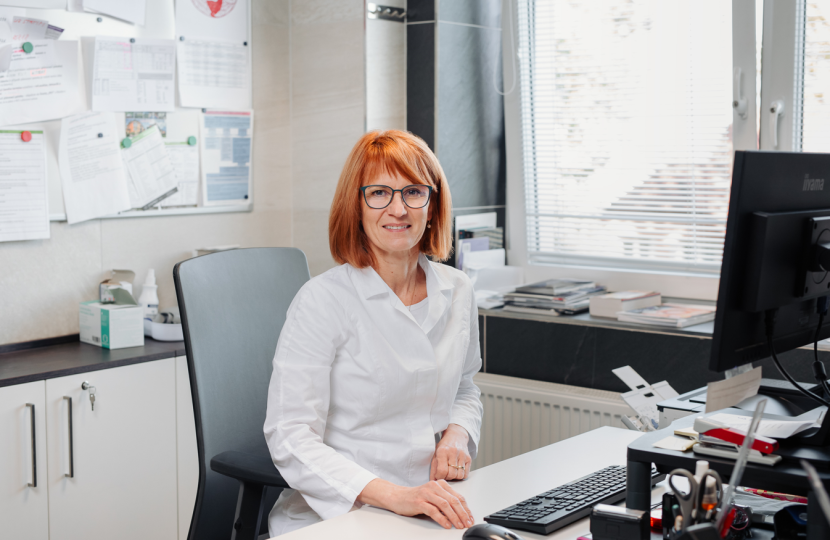
What do you think makes the Multiscan Cancer and Radiology Centre stand out?
Our department provides comprehensive care to oncology patients and, in addition to haematological malignancies, we are able to treat all types of cancer. We strive to provide the highest quality treatment based on new recommendations. Patients are treated in our beautiful facilities in a cosy hospital and there is a friendly and kind staff around. We all strive to make our patients feel comfortable, so I consider it the highest praise when a patient says they are looking forward to seeing us.
How much has the field of clinical oncology changed during your time in practice and how is it evolving now?
Clinical oncology is a field of medicine that is evolving very rapidly and where treatments are changing almost before our eyes. Treatment is positively affecting the prognosis of the disease and patients are surviving significantly longer than they did in the 20th century. Thanks to new drugs, many patients can be cured completely or have their lives prolonged while maintaining a good quality of life. Today, progress is moving in the direction of personalised medicine, tailored treatment. The tumour is examined at the genetic level and if an oncogenic mutation is found that we can influence, the patient is given a targeted drug. In this way, it is already possible to treat certain types of lung cancer, for example.
"There is no need to be afraid of cancer, because if detected early, it can be cured."
What types of cancer do you see the biggest advances in their curability?
It's hard to pick a diagnosis where current treatments are not prolonging patients' lives. The prognosis for patients with advanced malignant melanoma has improved significantly with biologic therapy and immunotherapy. Patients with stage IV malignant melanoma survive for several years with treatment. In addition, HER2-positive breast cancer was a poor prognosis disease before the era of biologic therapy, but today patients with this diagnosis can be completely cured. Treatment successes could be listed across all diagnoses.
Is there anything that you would advise everyone to do to prevent cancer?
Follow the general principles of a healthy lifestyle. Obesity, lack of exercise and stress are significant risks for cancer. So eat sparingly and varied meals, don't smoke, get enough exercise and enjoy life. Of course, you should also visit your doctor regularly for preventive examinations, by which I mean gynaecological examinations, mammograms and colonoscopies. The important thing is to know and listen to my body and, if something seems wrong, to see a doctor in time.